Based on my review of 20 Perplexity trackers’ pricing pages, documentation, data-collection disclosures and user reviews, Peec AI is the best Perplexity rank tracker for 2026 because it tracks Perplexity daily from $95 a month, breaks citations down to the URL and domain, and gives every teammate a seat.
In this guide, I’ll walk you through pricing, Perplexity data collection and drawbacks, so you can choose a tool to track brand visibility on Perplexity. I’ll also explain why SE Ranking, Semrush and Writesonic didn’t make the cut.
Think of it as the tool shortlist for layer one of our Perplexity Playbook, which covers how to earn the citations these tools measure.
Key Takeaways
- Top pick: Peec AI tracks Perplexity daily on its $95-a-month Starter plan, with URL-level citation data and unlimited users on every plan.
- Price range: Published entry prices run from Keyword.com’s $9.80 to Scrunch AI’s $250 a month; Profound now sells custom-priced Enterprise plans only.
- Free trials: None offers free-forever ongoing tracking, but Keyword.com, HubSpot AEO and Cairrot let you start a trial without a credit card.
- Data collection: Keyword.com, Otterly AI, Ahrefs Brand Radar and Profound document interface capture; Sonar API trackers can report very different brands.
- Choose Profound if: Your security team requires SSO and SOC 2, and you can go through a sales process for custom pricing.
At Mostash, we report how often clients appear across target prompts, how prominently Perplexity cites them, and their competitor share of voice. My framework weights Perplexity data quality and collection method (30%), citation and competitor insights (25%), pricing and value per prompt (15%), ease of use and reporting (15%), integrations, exports and security (10%), and reputation (5%).
I explain how I scored each tracker further down.
Perplexity Rank Tracker Comparison Table
Take a look at the top five Perplexity rank tracking tools side by side to see which one suits your team. Prices are monthly list prices from each vendor’s pricing page on November 25, 2026.
| Peec AI | Keyword.com | Ahrefs Brand Radar | Profound | Otterly AI | |
|---|---|---|---|---|---|
| Overall rating (out of 5) | 4.5 | 4.4 | 4.3 | 4.2 | 4.1 |
| Best for | Best overall | Budget tracking | Ahrefs users | Enterprise teams | Multi-country tracking |
| Starting price | $95/month | $9.80/month | $50/month | Custom pricing | €29/month |
| Free plan or trial | No free trial listed | 14-day free trial, no card | No free trial | Demo only | Free trial |
| How it collects Perplexity answers | Not stated (Enterprise adds a separate Perplexity API model) | Scrapes the live interface in a fresh logged-out session per run | Free, public web interface | Browser capture of the consumer front end | Public web interface (API only for Claude) |
| Prompts on entry plan | 50 prompts on 3 models | 100 credits (400 Perplexity runs) | 2,500 checks (80 prompts daily on 1 platform) | Custom | 16 prompts on 4 engines (2,000 credits) |
| Refresh cadence | Daily | Daily or weekly | Daily, weekly or monthly | Daily | Daily (weekly on Premium) |
| Cited URL data | Domain and URL sources, citation share | Citations vs competitors | Cited URLs and mentions in stored answers | Citations and sources | Citation sources, full answers stored |
| Cost per tracked answer (entry plan) | $0.021 | $0.0245 per Perplexity run | $0.020 | Not published | €0.0145 per credit |
| Recommended for | In-house teams reporting Perplexity share of voice | SEO teams on a small budget | Teams already paying for Ahrefs | Enterprises that need SSO and SOC 2 | Ecommerce brands selling in several countries |
A tracked answer is one prompt run once on one AI engine, so the cost row divides each entry price by the answers it buys in a 30-day month: 4,500 for Peec AI (50 prompts on 3 models, daily), 400 Perplexity runs for Keyword.com (0.25 credit each), 2,500 checks for Ahrefs and 2,000 credits for Otterly AI.
1. Peec AI: Best Overall Perplexity Rank Tracker
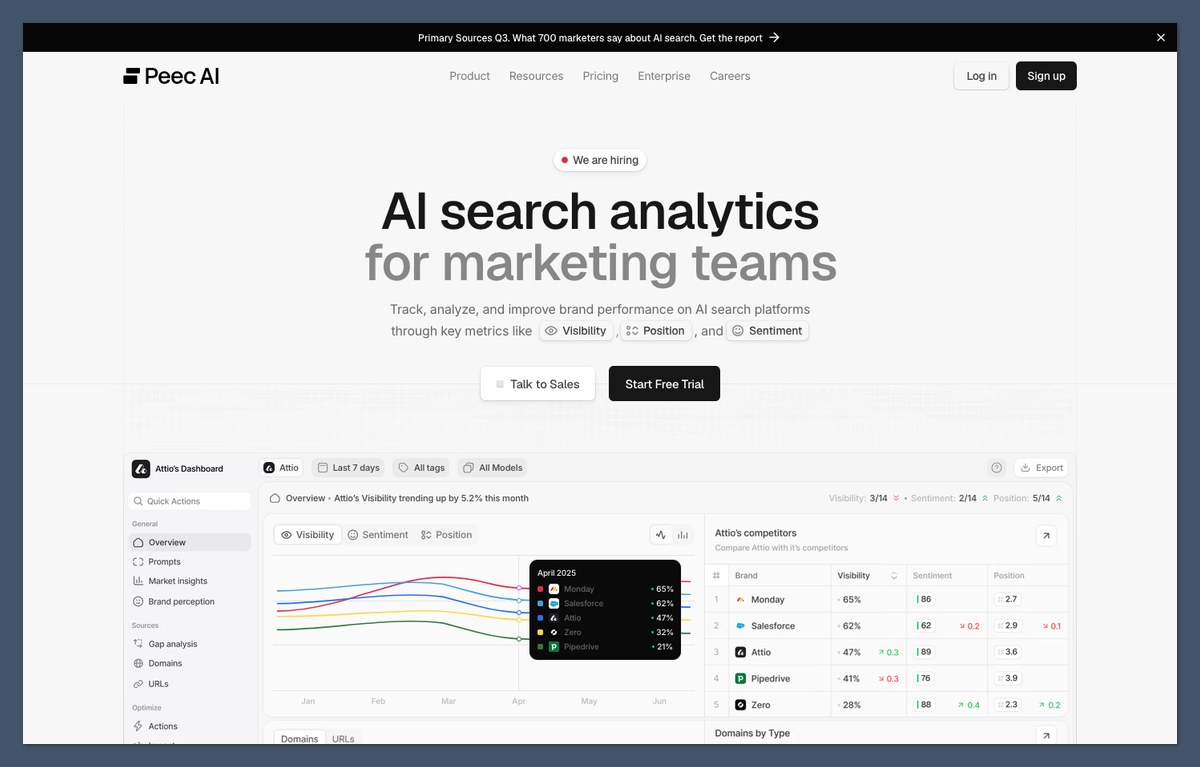
- Peec AI pricing: $95 to $495 per month, billed monthly; 15% off annually; Enterprise is custom
- Perplexity tracking: Daily on every plan, selectable as one of 3 active models
- Head-to-head: Read our Profound vs Peec AI comparison
Peec AI is my best overall pick because it combines daily Perplexity tracking with the deepest citation analysis here. URL and domain analytics sit alongside citation share, source classification, retrievals and query fan-outs, with unlimited users.
However, Peec doesn’t explicitly state its collection method. Enterprise lists a separate “Perplexity API” model, suggesting a distinction, not proving interface capture.
Starter also limits you to 1 country and 3 models. API access starts on Pro; Looker Studio requires Advanced.
Pros
- Daily Perplexity tracking on the entry plan
- URL-level citation share and source classification
- Unlimited users; SOC 2 Type II report on request
Cons
- Perplexity collection method not stated outright
- Three active models and one country on Starter
- API and Looker Studio require higher plans
What’s new with Peec AI?
Peec reportedly raised €18 million in November 2025, led by Singular. Its November 2026 lineup includes MCP on every tier, agent credits and a crawlability audit covering 40+ AI bots.
Why use Peec AI in 2026?
Searchable’s September 2026 vendor study of 2.1 million Perplexity answers found Reddit cited in 10.8% and LinkedIn in 8.3%. Peec’s source classification helps your content and PR teams identify which third-party domains influence your category.
My Peec AI review notes
What stands out to me is the answer allowance: Starter’s 4,500 answers cover 50 prompts across 3 models daily, not 4,500 Perplexity answers. Read weekly trends rather than treating an individual run as your ranking.
CSV exports and MCP are included on every plan, and the Google Analytics integration adds AI referral reporting. Request the SOC 2 Type II report during procurement.
How Much Does Peec AI Cost?
| Plan | Monthly price (billed monthly) | Billed annually | Prompts or credits | Perplexity included |
|---|---|---|---|---|
| Starter | $95 | 15% off | 50 prompts (4,500 answers), 1 country | Yes, as 1 of 3 models |
| Pro | $245 | 15% off | 150 prompts (13,500 answers), 3 countries | Yes, as 1 of 3 models |
| Advanced | $495 | 15% off | 350 prompts (31,500 answers), 3 countries | Yes, as 1 of 3 models |
| Enterprise | Custom | Custom (annual contract) | Unlimited prompts and countries | Yes, plus a separate Perplexity API model |
If Looker Studio matters more than citation depth, Otterly AI includes its connector at €189 a month, against $495 for Peec Advanced.
2. Keyword.com: Best Budget Perplexity Tracker
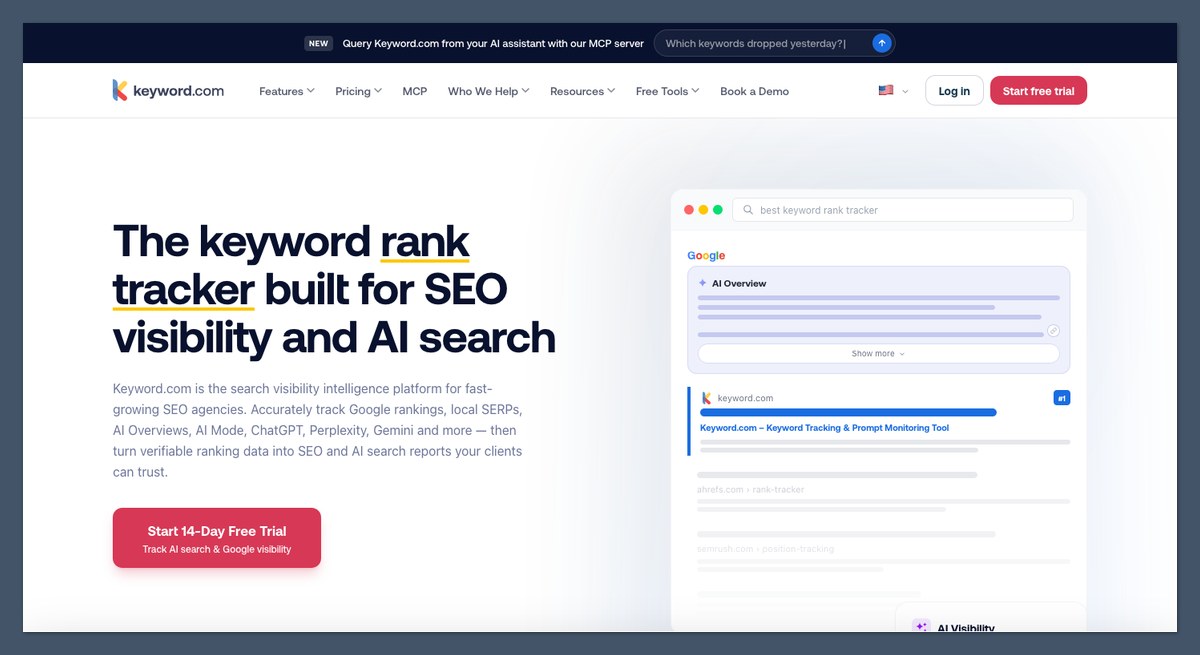
- Keyword.com pricing: $9.80 to $180 per month for AI Visibility credits; larger plans are custom
- Perplexity collection: Real interface, using a fresh logged-out session on every run
- Free trial: 14 days, no credit card required
Keyword.com is my budget recommendation for real-interface data. Its $9.80 plan buys 100 credits, or 400 Perplexity answers, with unlimited users and projects.
However, credits expire monthly. Those 400 runs cover 12 daily prompts in a 31-day month; 50 daily prompts consume 387.5 credits over the same period and fit the $39 tier.
Location targeting is country-level, so cities must go in the prompt. Don’t mistake a city named in your question for a collection session originating there.
Pros
- Real interface capture in fresh logged-out sessions
- Low entry price and no-card Perplexity trial
- API, MCP server and Looker Studio connector
Cons
- Monthly credits expire without rolling over
- City targeting requires including cities in prompts
- No published SSO, SOC 2 or crawler logs
What’s new with Keyword.com?
Keyword.com launched an MCP server in 2026 and now sells AI credit packs alongside 360 Visibility bundles. Its $33 monthly bundle includes 1,000 weekly Google keywords and 80 AI Visibility credits.
Why use Keyword.com in 2026?
Keyword.com puts Perplexity and Google reporting together instead of adding another dashboard. Spyglass verification shows the captured result behind a metric, useful when a stakeholder questions a visibility score or competitor ranking.
My Keyword.com review notes
I like the specificity of Keyword.com’s documentation: it says it “scrapes real Perplexity search results.” Fresh sessions prevent earlier chats from influencing results, but represent signed-out visitors, not Pro subscribers.
Daily or weekly schedules report mentions and citations against competitors. G2 rates Keyword.com 4.7/5 from more than 100 reviews.
How Much Does Keyword.com Cost?
| Plan | Monthly price (billed monthly) | Billed annually | Prompts or credits | Perplexity included |
|---|---|---|---|---|
| 100 credits | $9.80 | $94 per year | 100 credits (400 Perplexity runs) | Yes, 0.25 credit per run |
| 300 credits | $24.50 | $235 per year | 300 credits (1,200 runs) | Yes |
| 650 credits | $39 | $374 per year | 650 credits (2,600 runs) | Yes |
| 1,000 credits | $57 | $547 per year | 1,000 credits (4,000 runs) | Yes |
| 3,250 credits | $180 | $1,735 per year | 3,250 credits (13,000 runs) | Yes |
Best for SEO teams wanting interface data under $60 a month; skip it if procurement requires documented SSO or SOC 2.
3. Ahrefs Brand Radar: Best for Ahrefs Users
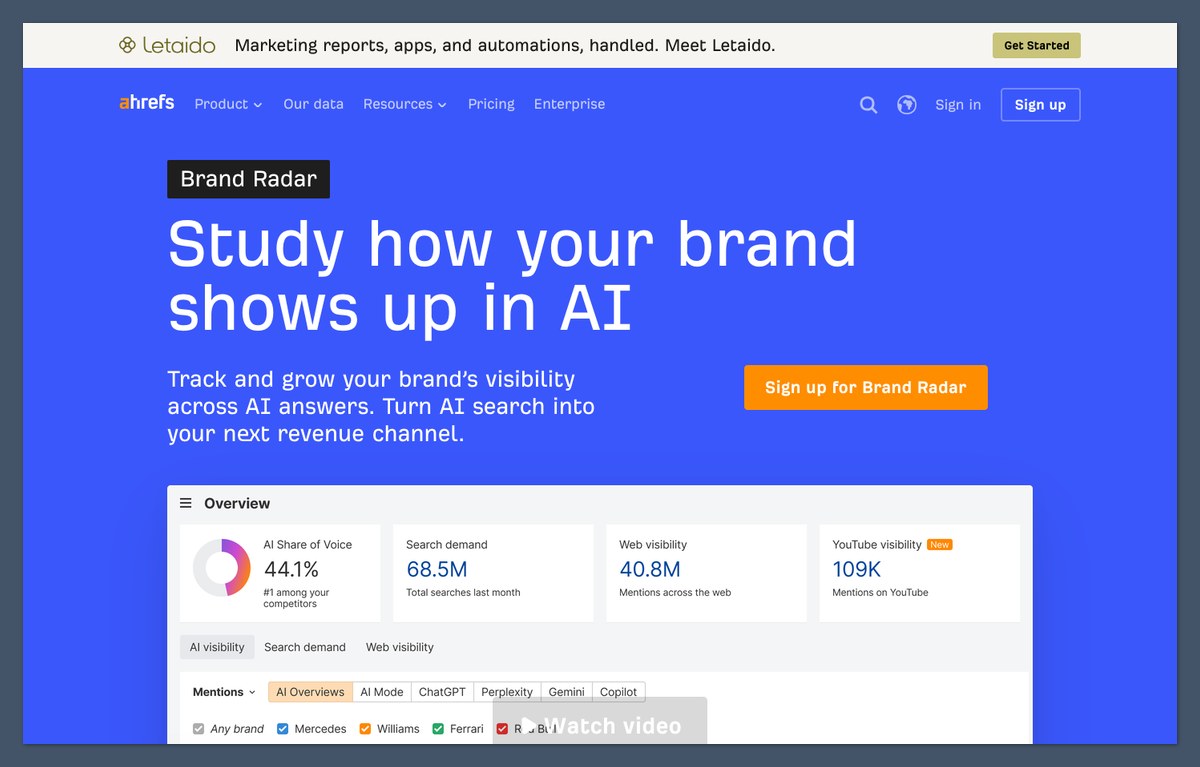
- Ahrefs Brand Radar pricing: $50 to $250 monthly for custom prompt packages; index access starts at $199
- Perplexity collection: Free, public web interface, with raw responses stored
- Included prompts: Ahrefs Lite, Standard and Advanced include 5, 10 and 20 daily prompts respectively
Ahrefs Brand Radar is my pick for existing Ahrefs users, because you can spend every check on Perplexity alongside your backlink data. The $50 Basic package buys 2,500 checks, covering 80 prompts daily on one platform.
However, one check covers one prompt, platform and location. Additional locations consume more checks, and Basic overage costs $0.020 per check.
The broader 592 million-prompt index refreshes Perplexity monthly, within a 90-day reporting window. Use Custom Prompts for weekly reporting rather than treating the index as a daily tracking feed.
Pros
- Perplexity answers collected through the public interface
- Basic package costs $0.020 per check
- Stored answers searchable for mentions and citations
Cons
- No free trial for evaluating the product
- Perplexity index refreshes monthly, not daily
- Extra platforms and locations multiply check consumption
What’s new with Ahrefs Brand Radar?
Ahrefs added YouTube, TikTok and Reddit tracking on January 6, 2026, then launched Custom AI Prompt Tracking on January 20. November brought a monthly study of Perplexity’s most-cited websites.
Why use Ahrefs Brand Radar in 2026?
Cited domains give your PR team a source-backed outreach list. Viewing them alongside backlink data helps prioritize publishers relevant to both SEO and AI visibility; AI Analytics adds crawler visits.
My Ahrefs Brand Radar review notes
I particularly value stored raw responses, which make aggregate figures inspectable. Ahrefs distinguishes linked-URL citations from string-matched mentions and uses both in AI share of voice.
Cadence is selectable per platform, so Perplexity can run daily while other engines run weekly.
How Much Does Ahrefs Brand Radar Cost?
| Plan | Monthly price (billed monthly) | Billed annually | Prompts or credits | Perplexity included |
|---|---|---|---|---|
| Basic package | $50 | Not published | 2,500 checks (80 prompts daily on 1 platform) | Yes |
| Growth package | $100 | Not published | 7,000 checks (100 prompts daily on 2 platforms) | Yes |
| Scale package | $250 | Not published | 25,000 checks | Yes |
| Included in Ahrefs Lite, Standard or Advanced | Part of your Ahrefs plan | Up to 17% off Ahrefs plans | 150, 300 or 600 checks (5, 10 or 20 daily prompts) | Yes |
| AI visibility index | From $199 | Not published | 592 million+ prompt database | Yes, refreshed monthly |
Already on Ahrefs Lite? Use its 5 included daily prompts first, then buy the $50 package when you outgrow them.
4. Profound: Best for Enterprise Teams
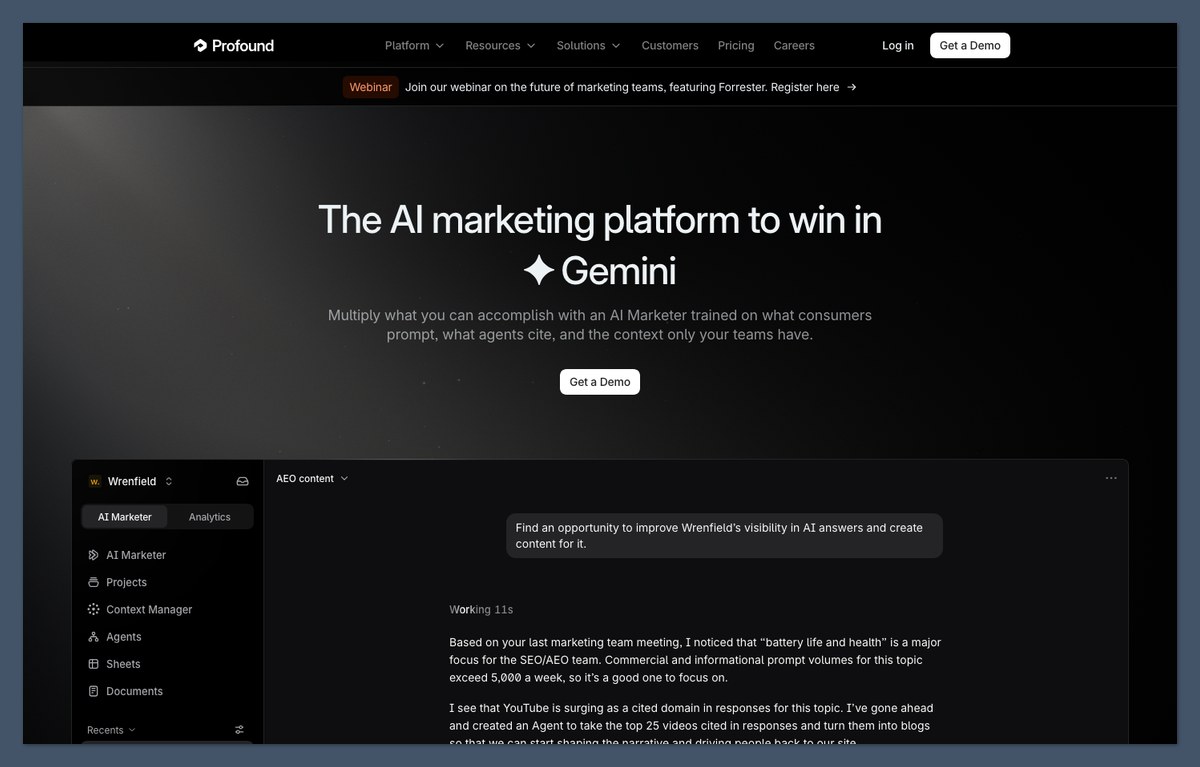
- Profound pricing: Custom pricing, Enterprise only
- Perplexity collection: Captures the consumer front end directly from the browser, not the API
- Head-to-head: Read our Profound vs Peec AI comparison
Profound is the strongest enterprise choice, combining browser capture with daily tracking across up to 10 answer engines. SSO/SAML, SOC 2 compliance and unlimited seats support larger teams.
However, Profound doesn’t publish prices. It retired Starter and Growth in September 2026; their associated $399 and $499 prices are unavailable to new subscribers.
Engines are contract-specific, so confirm Perplexity before signing. The broader engine catalog doesn’t replace an explicit commitment in your agreement.
Pros
- Browser capture of Perplexity’s consumer front end
- SSO/SAML, SOC 2 compliance and unlimited seats
- Agent Analytics connects to server-log infrastructure
Cons
- Custom pricing only, without self-serve subscriptions
- Answer engine coverage depends on your contract
- Signed-in state and Pro Search coverage unpublished
What’s new with Profound?
Profound raised a $96 million Series C at a $1 billion valuation on February 24, 2026, led by Lightspeed. Its September shift to Enterprise-only contracts is the bigger buying consideration.
Why use Profound in 2026?
Profound connects answer visibility with Agent Analytics and traffic attribution. Log integrations include Cloudflare and AWS, while Google Analytics connects AI referrals to sessions and Prompt Volumes shows what users ask answer engines.
My Profound review notes
The documentation’s “We capture directly from the browser” statement gives me a clearer collection baseline than Peec’s model labels. Enterprise retains all-time history and offers CSV/JSON exports plus API access.
Support includes a dedicated Slack channel and a specialist on a 24-hour SLA. That gives procurement a defined support commitment to evaluate alongside the security controls.
How Much Does Profound Cost?
| Plan | Monthly price (billed monthly) | Billed annually | Prompts or credits | Perplexity included |
|---|---|---|---|---|
| Enterprise | Custom pricing | Custom pricing | Custom prompt plan, tracked daily | Yes, among up to 10 answer engines set per contract |
| Starter and Growth (retired September 2026) | Not available to new customers | Not available | Not available | Not available |
Choose Profound when SSO and SOC 2 are procurement requirements and a sales cycle is acceptable; otherwise, Peec offers the clearer self-serve starting point.
5. Otterly AI: Best for Multi-Country Tracking
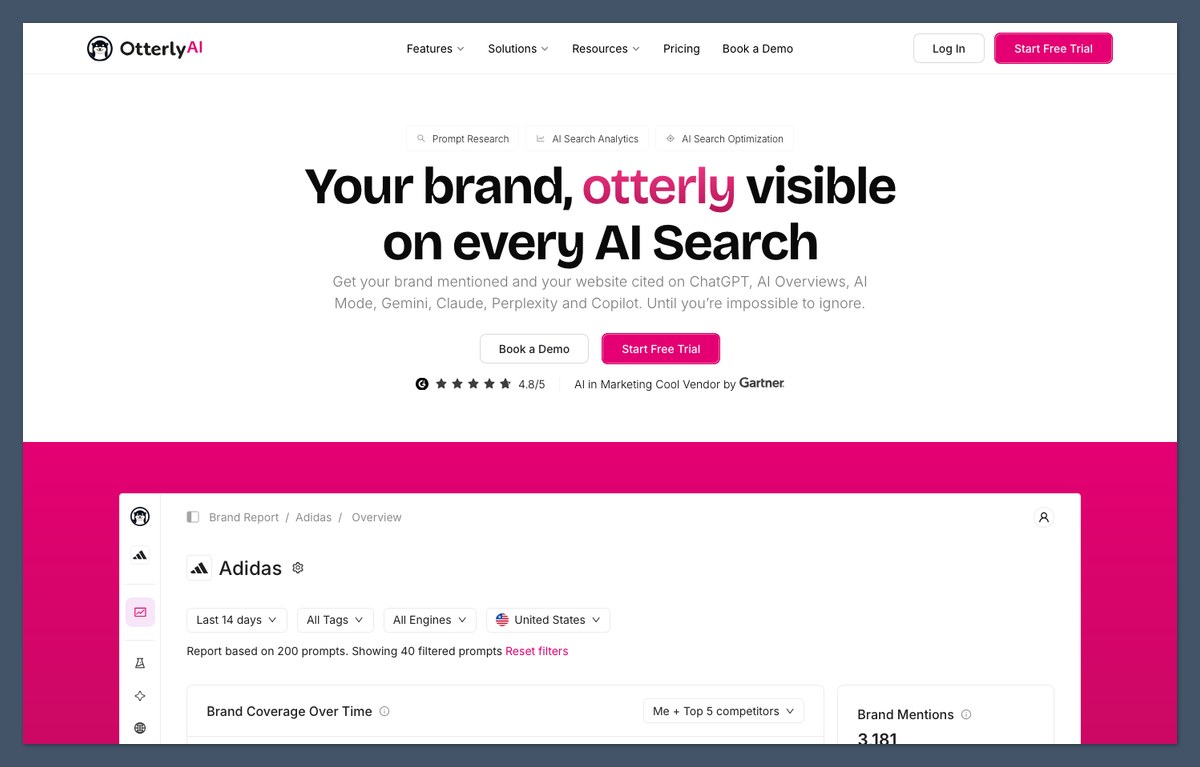
- Otterly AI pricing: €29 to €489 monthly; 15% off annually; Enterprise is custom
- Perplexity collection: Public web interface; APIs are used only for Claude
- Countries and seats: Unlimited countries, languages and team seats on every plan
Otterly AI is my multi-country recommendation because even €29 Lite includes unlimited countries, brands and competitors. Assign each prompt its own country without upgrading for another market.
However, credits still cap coverage. Lite’s 2,000 credits support 64 daily Perplexity-only prompts in a 31-day month, and you cannot buy extras.
API, MCP, agent analytics and Data Studio start on €189 Standard. Unlimited country access does not mean unlimited answers across those countries.
Pros
- Documented collection through Perplexity’s public interface
- Unlimited countries, languages and seats on every plan
- Full answer text stored for each prompt
Cons
- Lite credits cannot be topped up
- API and Data Studio require Standard
- No published SOC 2; Enterprise-only SSO
What’s new with Otterly AI?
Otterly’s help center, updated in November 2026, spells out public-interface collection for every engine except Claude. Its current plans also add ChatGPT Ads tracking and an Agency Partner program built on Standard and Premium.
Why use Otterly AI in 2026?
In cloro’s small July 2026 vendor study across six US states, 56% of Perplexity responses showed localization. That isn’t a universal rate, but it supports keeping separate market baselines rather than assuming US answers represent every buyer.
My Otterly AI review notes
I like that country settings attach to individual prompts. Otterly pairs stored answers with citation sources, visibility and sentiment, making market comparisons traceable.
Daily collection is standard; weekly scheduling starts on Premium. Lite users cannot stretch their credits by switching prompts to weekly collection.
How Much Does Otterly AI Cost?
| Plan | Monthly price (billed monthly) | Billed annually | Prompts or credits | Perplexity included |
|---|---|---|---|---|
| Lite | €29 | 15% off (save €52 a year) | 16 prompts (2,000 credits), daily | Yes, as 1 of 4 engines |
| Standard | €189 | 15% off (save €340 a year) | 120 prompts (15,000 credits), daily | Yes, as 1 of 4 engines |
| Premium | €489 | 15% off (save €880 a year) | 403 prompts (50,000 credits), daily or weekly | Yes, as 1 of 4 engines |
| Enterprise | Custom | Custom | From 1,000 prompts | Yes, unlimited engines |
Best for multi-market ecommerce brands; skip Lite for Looker Studio reporting, which requires Standard.
6. ZipTie: Best for Transparent Reporting
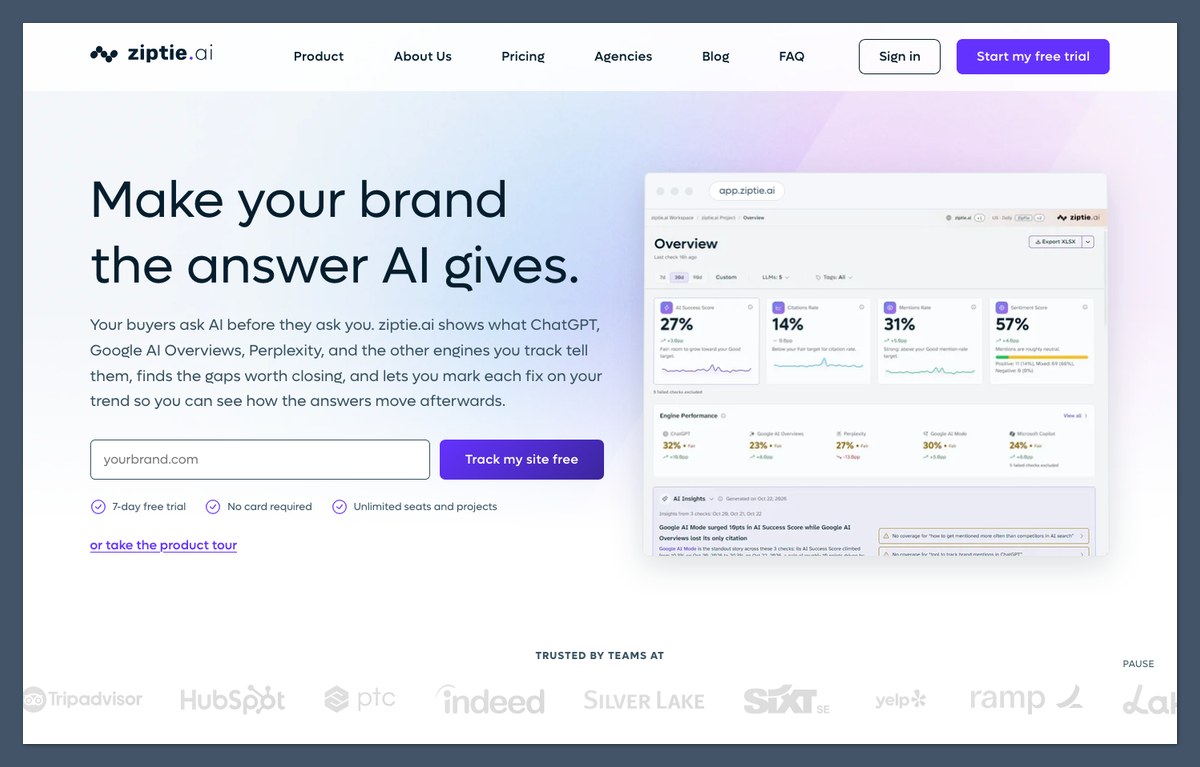
- ZipTie pricing: $0.30 monthly per daily prompt per engine; Starter preset costs $25.65
- Perplexity collection: Specialist providers return public answers and citations using your project’s country
- Free trial: 7 days without a card, but Perplexity requires payment
ZipTie is my pick for defending visibility reports. Its methodology specifies one answer per prompt per cycle, while change labels distinguish “Likely a real difference” from “Could be noise.”
However, provider-based collection remains ambiguous: ZipTie doesn’t specify interface capture versus API. It records source-list position, not in-answer brand position, and its public review base is tiny.
Pros
- Perplexity-only daily prompts cost $0.30 monthly each
- Cited URLs retain their source-list position
- Change verdicts distinguish movement from noise
Cons
- Free trial does not include Perplexity
- One answer per prompt per collection cycle
- No crawler logs and few public reviews
What’s new with ZipTie?
ZipTie moved to ziptie.ai and published a country-coverage snapshot dated August 26, 2026. Confirm that your target country supports Perplexity before configuring a project.
Why use ZipTie in 2026?
ZipTie’s ranges and change verdicts help prevent reporting random movement as a campaign win. Paid plans also connect GA4 AI-assistant sessions, while Search Console connects on every plan.
My ZipTie review notes
I value the documented minimum sample requirements: verdicts need 30 answers and 20 prompts on each side. Every check stores full answers and cited URLs with source-list positions.
Seats and projects are unlimited; REST API and MCP cost $10 extra monthly. For Perplexity alone, 100 prompts checked daily cost $30.00 a month.
How Much Does ZipTie Cost?
| Plan | Monthly price (billed monthly) | Billed annually | Prompts or credits | Perplexity included |
|---|---|---|---|---|
| Starter preset | $25.65 | 20% off | 30 daily prompts on ChatGPT, AI Overviews and Perplexity | Yes |
| In-house brand example | $230.95 | $184.76 per month | 50 daily, 300 weekly and 1,000 monthly prompts on all 7 engines | Yes |
| Professional preset | From $340.20 | 20% off | 100 daily and 280 weekly prompts on 5 engines, UGC analysis | Yes (selectable) |
| Enterprise preset | From $1,647.00 | 20% off | Largest starting configuration | Yes (selectable) |
At $0.01 per check, ZipTie undercuts Keyword.com’s $0.0245 per run, but Keyword.com documents interface capture and includes Perplexity in its trial.
7. Scrunch AI: Best for Persona-Based Tracking
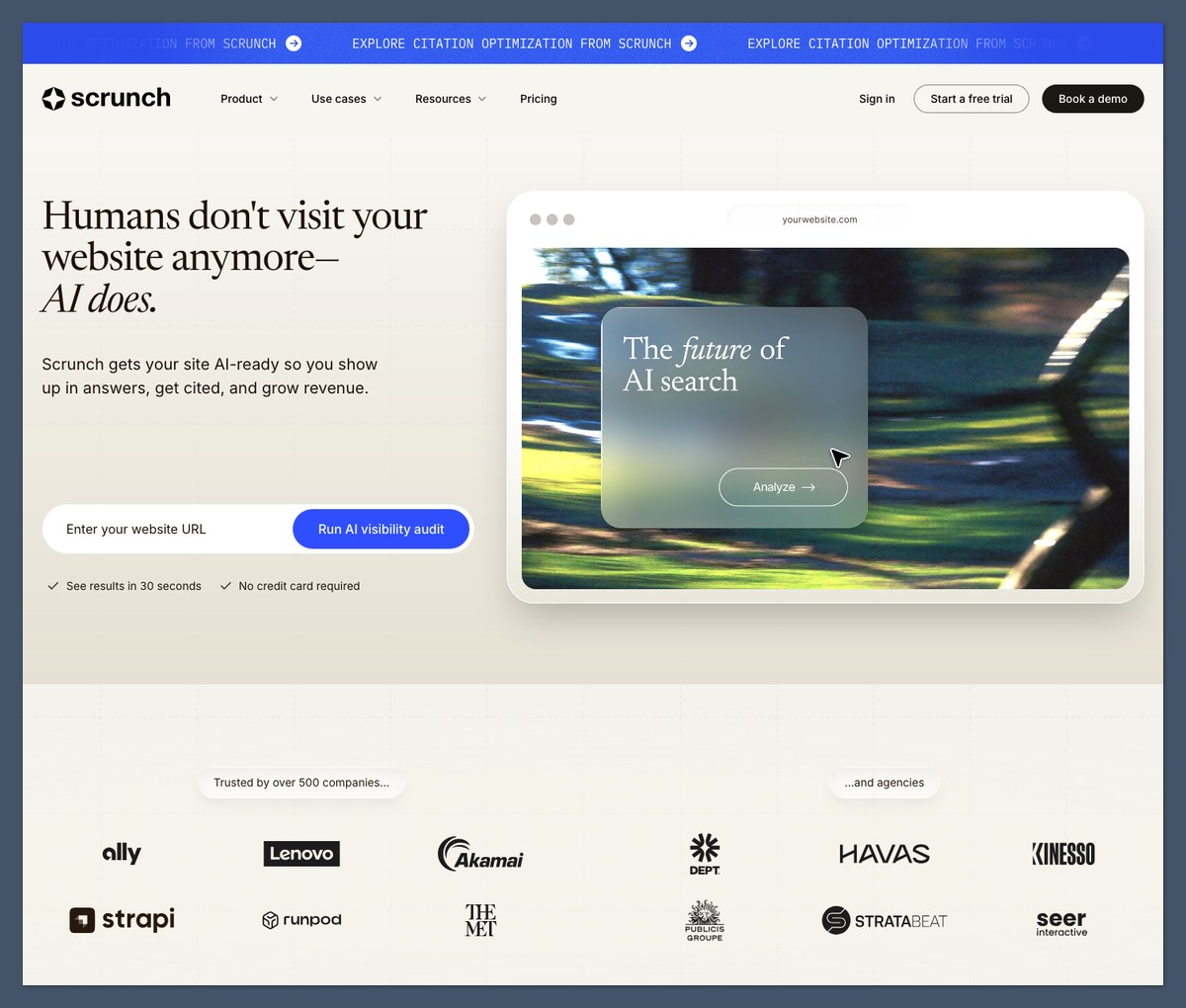
- Scrunch AI pricing: Core costs $250 monthly; Enterprise is custom and billed yearly
- Perplexity collection: Browser automation and platform APIs; engine-specific method unstated
- Free trial: 7 days on Core
Scrunch AI is my pick for persona-based reporting. Core collects daily across 8 engines, including Perplexity, with 15,000 monthly responses and any country, language or persona.
However, Core caps you at 5 seats and 5 competitors. API and SSO require Enterprise; ask which collection method feeds Perplexity during your trial.
Pros
- Any country, language and persona on Core
- Eight engines and 15,000 monthly responses
- AI agent traffic and referrals included
Cons
- Perplexity-specific collection method is not stated
- API and SSO require Enterprise contracts
- Core limits seats and competitor coverage
What’s new with Scrunch AI?
Sitecore announced its acquisition of Scrunch on June 3, 2026, and Scrunch says it still runs as a standalone platform. Its current lineup adds Shopping reports and citation targets (10 a month on Core), while Enterprise adds Agent Pages that serve optimized pages to AI agents.
Why use Scrunch AI in 2026?
A CFO and a developer can ask different buying questions. Persona segmentation helps expose those gaps, while product-level Shopping reports support an ecommerce AEO strategy.
My Scrunch AI review notes
My main concern is mixed collection methods, which the FAQ confirms without specifying Perplexity’s source. Core reports citations and mentions by funnel stage, with daily collection.
Its AI agent traffic allowance covers one domain, so multi-site teams should account for that restriction. Core also limits coverage to one brand plus five sub-brands.
How Much Does Scrunch AI Cost?
| Plan | Monthly price (billed monthly) | Billed annually | Prompts or credits | Perplexity included |
|---|---|---|---|---|
| Core | $250 | Not offered (Core bills monthly) | 15,000 AI responses, 8 LLMs, 5 seats | Yes |
| Enterprise | Custom | Custom (billed yearly) | Custom responses, unlimited seats | Yes |
If your buyers split into distinct roles, use the 7-day Core trial to compare each persona’s Perplexity coverage rather than relying on one blended visibility score. Weighing it against Profound? Our Profound vs Scrunch AI comparison goes round by round.
8. HubSpot AEO: Best for HubSpot Users
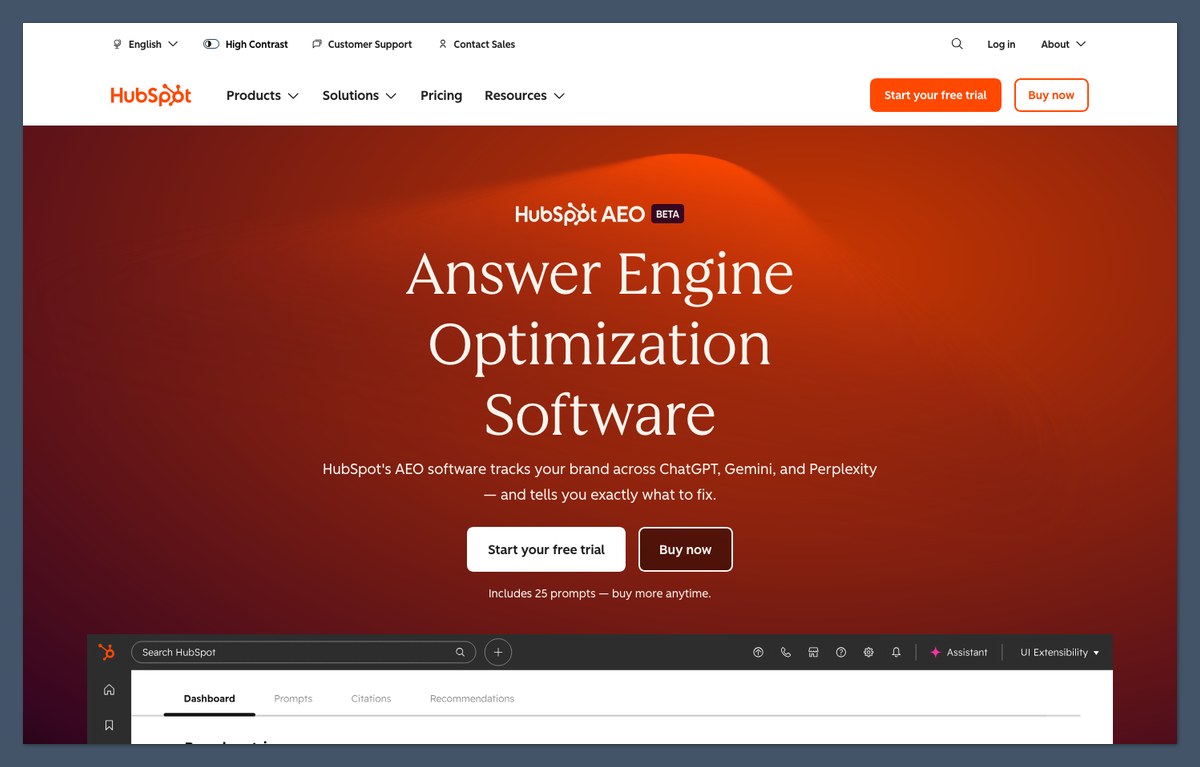
- HubSpot AEO pricing: $50 monthly or $45 per month billed annually, per brand
- Perplexity tracking: Included alongside ChatGPT and Gemini; visibility score updates daily
- Free trial: 25 prompts across all three engines, no card
HubSpot AEO is the easiest fit for HubSpot-based teams. No other HubSpot subscription is required, while Marketing Hub Pro or Enterprise adds CRM-powered recommendations.
However, the base allowance is 25 prompts. Additional prompt pricing, country targeting and AEO export/API details aren’t published, nor is its Perplexity collection method.
Pros
- No other HubSpot subscription is required
- Citation analysis by domain and page
- Recommendations connect to HubSpot content workflows
Cons
- Base subscription includes only 25 prompts
- Country targeting and export details unpublished
- One G2 reviewer flags shallow prompt analysis
What’s new with HubSpot AEO?
HubSpot launched AEO on April 14, 2026, at $50 monthly. It also says it acquired XFunnel in 2026 and built the product using lessons from its own brand.
Why use HubSpot AEO in 2026?
Source-type analysis separates owned content from competitor and third-party coverage. That helps your team decide whether to update a HubSpot page or pursue coverage elsewhere instead of treating every visibility gap alike.
My HubSpot AEO review notes
I like that exact responses remain inspectable, with filters for engine and buyer’s journey phase. The dashboard combines share of voice with a visibility trend and sentiment scored from -100 to +100.
Suggested prompts draw on your company, competitors and industry. Review those suggestions against your actual buying questions before spending the limited base allowance.
How Much Does HubSpot AEO Cost?
| Plan | Monthly price (billed monthly) | Billed annually | Prompts or credits | Perplexity included |
|---|---|---|---|---|
| HubSpot AEO | $50 | $45 per month | 25 prompts (more available) | Yes |
| AEO in Marketing Hub Pro or Enterprise | Included with the hub | Included with the hub | Expanded prompt count (not published) | Yes |
| AEO Grader | Free | Free | One-time snapshot of pre-set queries | Yes, from live search |
Best for HubSpot teams with focused prompt sets; skip it for country-level reporting or raw-export requirements unless HubSpot confirms those capabilities.
9. Cairrot: Best for Crawler and Citation Position Data
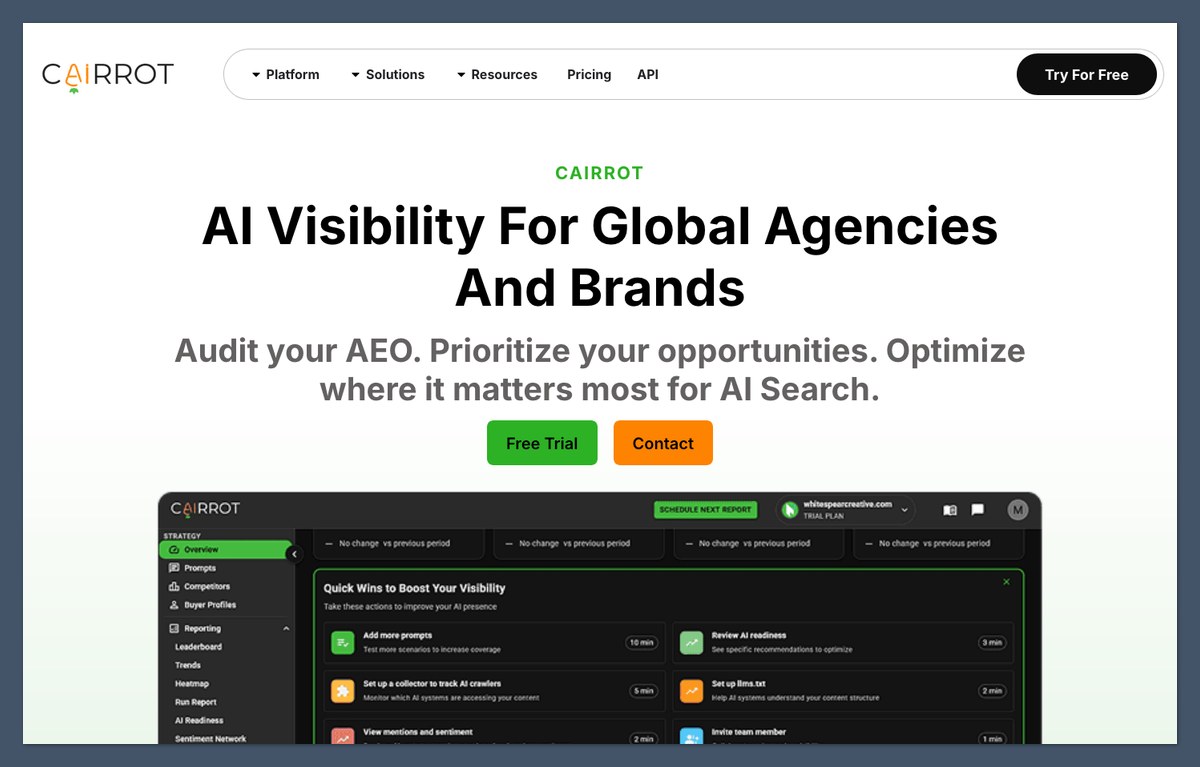
- Cairrot pricing: $39 to $299 per month
- Perplexity tracking: Every plan; Starter covers ChatGPT and Perplexity
- Free trial: Available without a credit card
Cairrot is my pick for citation positions plus crawler data. It records source-list placement, logs PerplexityBot visits through WordPress and connects GA4 referrals to landing pages.
However, collection method and refresh cadence aren’t published. Starter covers 15 prompts, and crawl logging requires WordPress; its G2 rating of 5.0 comes from just 3 reviews.
Pros
- Citation position within Perplexity’s source list
- Page-level PerplexityBot logs through WordPress
- Unlimited API, webhooks and MCP on every plan
Cons
- Starter includes only 15 tracked prompts
- Collection method and refresh cadence unpublished
- Crawl logging requires the WordPress plugin
What’s new with Cairrot?
Cairrot opened its Garden agency partner program in May 2026. Grok tracking is also available as an add-on from $25.
Why use Cairrot in 2026?
Cairrot warns that firewalls can block Perplexity’s bots despite permissive robots.txt rules. Its crawl logs help identify changes in access; first, prepare your site for AI crawlers.
My Cairrot review notes
The distinction I value is PerplexityBot versus Perplexity-User: indexing activity versus live page fetching. Cairrot supports citation tracking in 10 languages and city or region-level prompts.
Its plugin also manages llms.txt and Organization structured data, although neither guarantees citations. Read crawl access alongside citation results rather than treating a bot visit as evidence of a recommendation.
How Much Does Cairrot Cost?
| Plan | Monthly price (billed monthly) | Billed annually | Prompts or credits | Perplexity included |
|---|---|---|---|---|
| Starter | $39 | Not published | 15 prompts, 2 LLMs, up to 3 team members | Yes |
| Pro | $99 | Not published | 40 prompts, 5 LLMs, up to 10 team members | Yes |
| Enterprise | $299 | Not published | 100 prompts, 5 LLMs, unlimited team members | Yes |
For a WordPress site prioritizing Perplexity, Cairrot’s $39 plan is my budget choice for viewing citation position and crawler activity together, provided you resolve the collection and cadence questions before committing.
How Do I Choose the Right Perplexity Rank Tracker?
Start with collection method, then citation detail and prompt allowances. Price comes last: cheap answers aren’t useful if they measure the wrong product.
For equal coverage across engines, see our best AEO trackers guide. This shortlist prioritizes Perplexity-specific reporting.
- Interface capture or Sonar API? Ask which Perplexity experience the tracker measures, not just whether it supports Perplexity.
- Which URLs, and in what position? Perplexity citation tracking should expose source-list placement, as Cairrot and ZipTie do.
- Separate mentions and citations? A named brand and a cited URL are different outcomes, so require separate metrics.
- How many answers, how often? Calculate your Perplexity allowance after other engines consume their share, and confirm the collection schedule.
- Cost per tracked answer? Compare ZipTie’s $0.01, Ahrefs’ $0.020, Peec’s $0.021, Keyword.com’s $0.0245 and Otterly’s €0.0145, remembering Peec’s figure spans three models.
- Which countries are included? Peec Starter allows one; Otterly and Scrunch support multiple markets without country-count caps.
- Can you export into your reports? Confirm API or CSV access, and remember last-click attribution in AI search misses exposure without clicks.
Can I Switch Perplexity Trackers?
Self-serve options offer monthly billing, but switching resets your measurement baseline. History doesn’t automatically transfer, and different collection methods can produce different results.
Paul Dyer, CEO of /prompt, told Digiday in May 2026: “If you use three different tools and give them the same prompts, you get three different answers.” Export your prompts and history, then overlap subscriptions for a few weeks before rebasing reports.
Why Aren’t SE Ranking and Semrush on This List?
SE Ranking’s SE Visible no longer covers Perplexity. Its current engine list excludes it, despite a June 2026 changelog naming it; removal therefore happened between June and November. Don’t buy it based on an older roundup.
Semrush’s $99 AI Visibility Toolkit excludes Perplexity from Prompt Tracking. Its knowledge base specifies ChatGPT, Google AI Mode or Gemini; Perplexity is claimed only for sales-led Enterprise AIO. Adobe completed its Semrush acquisition on April 28, 2026.
Writesonic reserves Perplexity for custom Enterprise plans. Its self-serve subscriptions from $99 monthly cover ChatGPT, Gemini and Google AI Overviews instead.
If you also need Semrush’s SEO data, our Semrush One vs Peec AI comparison and Profound vs Semrush breakdown explain the trade-offs.
API or Browser Capture: Why Your Perplexity Numbers Differ
The consumer app and Sonar API aren’t interchangeable. Brandlight’s June 2026 vendor study of 836 matched prompts found 6% brand overlap between Sonar Pro and perplexity.ai, with top-brand agreement in 9% of answers. Interface responses averaged 10.0 citations against the API’s 7.8; these were World Cup prompts collected on adjacent days, so treat the gap as directional.
Rankscale uses Sonar APIs, while Trakkr sends prompts to providers’ APIs. Both can track repeatable prompt sets, but they measure a different product from the consumer interface.
Interface capture isn’t universal ground truth either: Keyword.com explicitly uses logged-out sessions, and none of these nine documents Pro Search or Comet capture. Comet reached iOS in March 2026; signed-in history can also affect answers, part of how user behavior shapes AI search. Read trend lines, not a definitive ranking.
How We Test and Rank the Best Perplexity Rank Trackers
I reviewed 20 Perplexity tracking tools, from Profound’s enterprise platform to Keyword.com’s $9.80 credit pack. The review covered pricing pages, plan limits, collection disclosures, methodology documentation, help centers, changelogs, news and public G2, Capterra and OMR reviews. Prices were checked on November 25, 2026.
I weighted six categories around what makes Perplexity reporting useful to in-house teams:
- Perplexity data quality and collection method (30%): Documented interface or API collection, refresh cadence, sampling and country controls.
- Citation and competitor insights (25%): Cited URLs, source positions, separate mention/citation metrics, share of voice and sentiment.
- Pricing and value per prompt (15%): Entry cost, trial availability and price per tracked answer.
- Ease of use and reporting (15%): Seats, documented dashboard organization and inspectable stored answers.
- Integrations, exports and security (10%): Reporting connections, APIs, crawler data and procurement requirements.
- Reputation (5%): Public review ratings and volume, plus acquisitions and retired plans.
Peec leads through citation depth and unlimited seats. Keyword.com and Ahrefs offer low-cost interface capture; Profound scores strongly on collection and governance but loses ground on price transparency and self-serve access.
Otterly fits multi-market teams, ZipTie supports defensible reporting, and Scrunch segments buyer personas. HubSpot AEO and Cairrot earn specialist places for HubSpot workflows and WordPress crawler diagnostics, rather than strictly beating every omitted tool on weighted score.
Eight other candidates cover Perplexity but missed the shortlist:
- Rankscale and Trakkr: API-based Perplexity collection.
- Wellows: Browser capture, but little independent review evidence.
- Searchable and Rankability: Neither clearly states its Perplexity collection method.
- LLM Pulse: Weekly tracking by default.
- xSeek: Collection method isn’t published.
- AthenaHQ: Unpublished collection and cadence details; CMSWire reported on November 17, 2026, that Bloomreach is buying it.
The ratings reflect documented capabilities and buyer fit, not a promise that every tracker reproduces an individual buyer’s answer. Prioritize the collection method and reporting workflow over small score differences.
Final Verdict: Which Perplexity Rank Tracker Do I Recommend?
My review points to Peec AI as the best Perplexity rank tracker for most in-house teams: daily tracking from $95 a month, URL-level citation data and a seat for everyone reading the report. Its collection-method disclosure remains less explicit than Keyword.com’s or Profound’s.
Choose your alternative around the requirement Peec doesn’t meet: start with Keyword.com’s 14-day trial for budget tracking, use your included Ahrefs prompts if you already subscribe, or talk to Profound when security requirements decide the purchase. Keep the same prompt set when comparing options so differences in coverage don’t distort your reports. To establish where your brand stands today, run our free AI visibility check first, then trial the tracker that fits.
FAQs
Can Google Search Console show my Perplexity visibility?
No. Search Console reports Google Search performance, not Perplexity answers or crawler activity; GA4 can record perplexity.ai referral clicks, but a mention alone creates no referral session. A Perplexity tracker fills that gap by running scheduled prompts and recording whether your brand was named or your pages cited, including answers that never generate a website visit.
What’s the difference between a mention and a citation in Perplexity?
A mention is your brand name in the answer; a citation is your URL in the source list. Perplexity can cite your page without naming your brand, or name your brand while citing someone else, so Perplexity brand mention monitoring should track both separately. Our guide to AI search visibility factors explains the signals behind these different forms of exposure.
How many prompts should I track in Perplexity, and how often?
Start with 25 to 50 prompts, then expand toward 100 to 200, following Rankability’s guidance. Run them daily where possible and read trends over weeks, not single days. SparkToro and Gumshoe found recommendation lists repeated in under 1% of runs across other AI engines, not Perplexity specifically, which supports caution about treating one sampled answer as a stable ranking.
Can I track Perplexity rankings for free?
Yes, manually, but none of these nine offers a free-forever automated tracking plan. HubSpot’s free AEO Grader provides a snapshot; Keyword.com offers a 14-day no-card trial, and HubSpot AEO trials include 25 prompts without a card. For an initial baseline, a spreadsheet can cover 20 or 30 weekly prompts, following the method in our Perplexity Playbook.
How do I know if PerplexityBot can reach my site?
Check robots.txt, inspect server logs for PerplexityBot and Perplexity-User, and validate requests against Perplexity’s published IP lists. Firewall rules can block otherwise permitted bots; Cairrot and Trakkr distinguish those agents, while Peec and Profound also offer crawler analytics. Our AI crawler study explains bot activity, but successful access makes retrieval possible, not citation guaranteed.
Is Perplexity still worth tracking in 2026?
Yes, for relevant B2B SaaS and ecommerce audiences, as one engine among several. Third-party estimates put monthly queries at 1.2 to 1.5 billion by mid-2026, versus 780 million in May 2025, while Similarweb data showed Perplexity’s share of AI chatbot web visits falling from 2.0% in March to 1.3% in May 2026. Our assessment of whether AEO is worth it puts visibility alongside the wider ROI question.