

After spending more than 200 hours reviewing and testing 18 B2B AI tools across sales, marketing, research, and automation categories, our team has narrowed the field down to the six platforms that actually move the needle for B2B teams in 2026.
Apollo.io takes the top spot for sales and prospecting thanks to the depth of its contact database, its built-in sequencing, and its aggressive AI feature roadmap.
For marketing, Jasper and Demandbase lead their respective niches, while Perplexity has become the default research layer for most knowledge workers we spoke to.
In this guide, I will walk through the top tools in each category, their pricing, what they actually do well, and where they fall short.
The goal is to help you build a stack that fits your team size and your go-to-market motion, not to hand you a list of 50 tools you will never evaluate.
Our Top 6 B2B AI Tools
- Apollo.io – Best for B2B sales and prospecting
- Gong – Best for revenue intelligence and call coaching
- Jasper – Best for brand-safe content at scale
- Demandbase – Best for account-based marketing
- Perplexity – Best for research and strategic planning
- Microsoft Copilot for 365 – Best horizontal productivity layer
In addition to profiling each tool, I have included sample “starter stacks” for three common team profiles at the end of this guide, along with notes on how each platform fits into the new reality of AI-driven search, where buyers discover vendors through ChatGPT, Perplexity, and Gemini as often as through Google.
B2B AI Tools Comparison Table
Here is a side-by-side view of our top picks to help you see which tool fits which job to be done:
| Tool | Best For | Starting Price | Typical Buyer | Free Trial |
|---|---|---|---|---|
| Apollo.io | Sales and prospecting | $49 per user / month (annual) | SDR and AE teams | Free plan available |
| Gong | Revenue intelligence | Custom (≈$1,600 per user / year + $5,000 platform fee) | RevOps, sales leaders | No free trial |
| Jasper | Brand-safe content | $59 per seat / month (annual) | Marketing and content teams | 7-day free trial |
| Demandbase | Account-based marketing | Custom (median $65K per year) | Enterprise B2B marketing | Free account ID tool |
| Perplexity | Research and strategy | Free, Pro at $20 / month | Knowledge workers, analysts | Free tier available |
| MS Copilot for 365 | Productivity copilot | $30 per user / month (add-on) | Microsoft-centric organizations | No free trial |
#1.Apollo.io: Best for B2B Sales and Prospecting
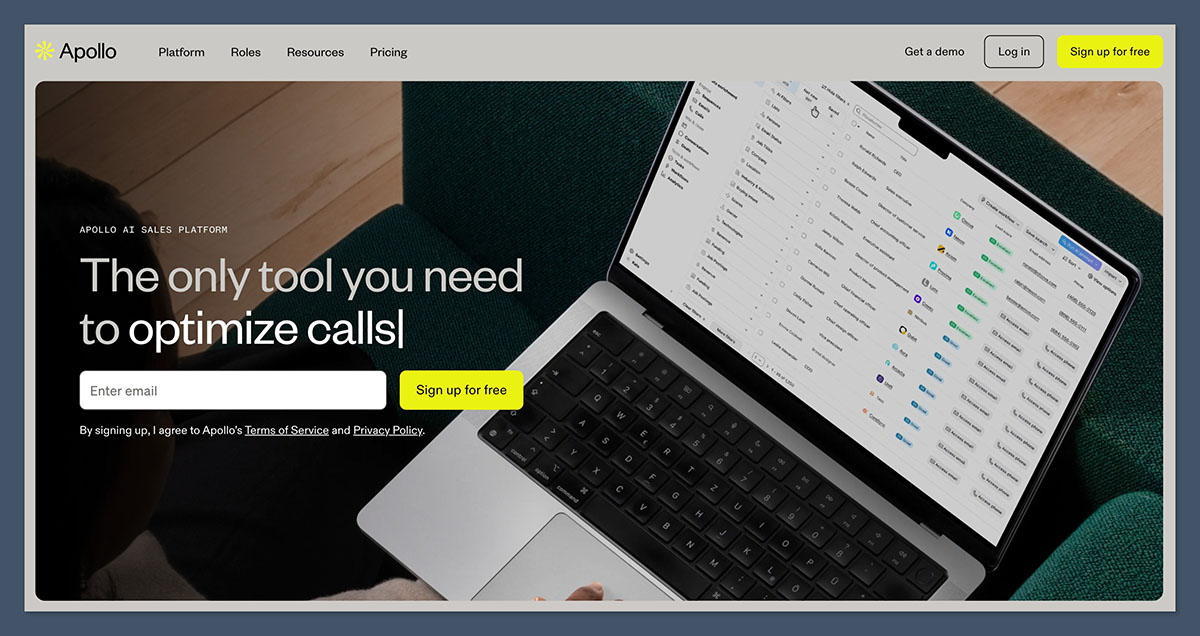
Starting price: $49 per user / month (billed annually)
AI features: AI enrichment, email generation, conversation intelligence
Free plan: Yes, with 100 credits per month
Apollo.io is the tool I recommend first when a B2B team tells me they need to generate more pipeline.
It combines a contact database of over 210 million records, email sequencing, dialer, and AI-driven enrichment in a single platform, which means most SDR teams can replace two or three point solutions with one subscription.
What we like about Apollo.io
- 210M+ contact database with built-in filters for firmographics, technographics, and intent
- Sequencing, dialer, and CRM sync included at every paid tier
- Transparent, published pricing, which is rare in the sales intelligence category
- Generous free plan for testing before you commit
What could be better
- Credit-based pricing can push real costs 2–3x above the sticker price for heavy phone prospecting
- Reported email bounce rates of 15–25%, which can hurt domain reputation
- Credits expire monthly with no rollover
- Seat reductions are not allowed mid-contract
Recent updates: Apollo moved to a unified credit system where every data action draws from one pool, and phone lookups now cost 8 credits compared to 1 for email reveals — worth modeling before you commit to a tier.
How Much Does Apollo.io Cost?
- Apollo’s pricing ranges from $0 (Free) to $119 per user per month (Organization plan, annual billing)
- Basic is $49 per user per month, Professional is $79 per user per month, both billed annually
- Monthly billing adds roughly 20% to each tier
- Overage credits cost $0.20 each with a 250-credit minimum purchase
- The Organization plan requires a minimum of three users
Why Use Apollo.io in 2026?
Most B2B teams are consolidating their sales stack to cut costs and reduce tool fatigue, and Apollo is one of the few platforms broad enough to act as the hub.
Its 2026 roadmap leans into AI agents that research accounts, draft personalized emails, and prioritize which prospects to call first, which means the platform is evolving from a contact database into something closer to an autonomous SDR layer.
For teams that do not need the depth of Gong or the precision of Demandbase, Apollo is the most pragmatic starting point.
Apollo.io is suitable for:
- SDR and AE teams running email-led outbound
- Small and mid-market B2B companies consolidating their stack
- Teams that want transparent, self-serve pricing
Apollo.io is not suitable for:
- Enterprise teams needing deep integration governance
- High-volume phone prospecting (credit costs escalate)
- Teams that require sub-5% email bounce rates
#2. Gong: Best for Revenue Intelligence
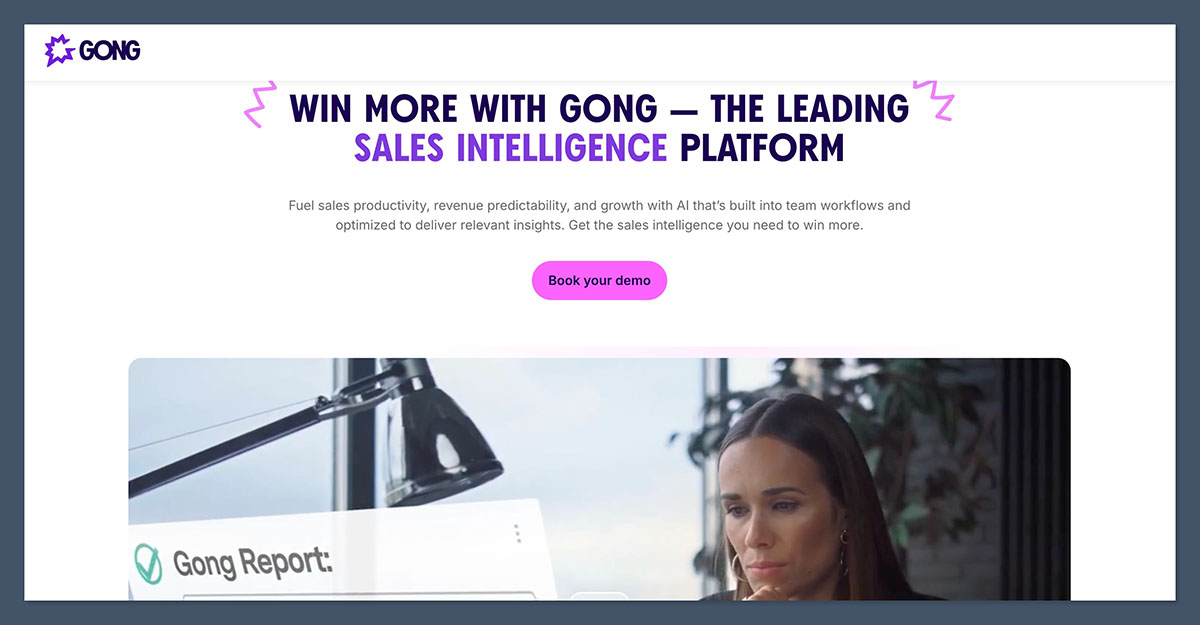
Starting price: Custom (approximately $1,600 per user / year + $5,000 platform fee)
AI features: Call transcription, deal risk scoring, AI coaching
Free plan: No free plan or free trial
Gong is the category leader in conversation intelligence, and for teams running deals worth $50,000 or more, the AI it brings to call coaching, deal risk, and forecasting is difficult to replicate.
The platform records every customer conversation, transcribes it, and surfaces patterns that would take a human manager weeks to spot manually.
What we like about Gong
- Best-in-class conversation intelligence and deal risk signals
- Strong AI coaching features that actually change rep behavior
- 4.7/5 rating on G2 with 6,400+ reviews
- Dedicated Customer Success Manager included at most tiers
What could be better
- No published pricing, every deal requires a sales conversation
- Mandatory $5,000–$50,000 platform fee on top of per-user licenses
- 2–3 year contracts with auto-renewal uplifts of 5–15%
- Onboarding fees typically start at $7,500
Recent updates: Gong restructured to a modular pricing model in 2025, which means teams now pay roughly $1,400–$1,600 per user for Foundations alone, with Engage and Forecast sold as separate modules that can double the total per-user cost.
How Much Does Gong Cost?
- Gong does not publish prices, but reported figures put the base Foundation license at roughly $1,600 per user per year
- A mandatory platform fee starts at $5,000 per year and scales to $50,000+ for larger organizations
- Onboarding fees typically add $7,500 or more in year one
- The median Vendr-reported contract sits around $65,000 per year
- Add-on modules (Engage, Forecast) can add another $700–$800 per user per year
Why Use Gong in 2026?
Gong is where you land when call coaching and deal inspection become the bottleneck on your revenue engine. The AI features in 2026 have shifted from descriptive (“here is what happened on the call”) to prescriptive (“here is the email you should send next and the risk this deal will slip”).
For any team with complex, multi-stakeholder deals, the data Gong produces is a strategic asset. The catch is price: for teams under 25 users, the platform fee inflates the effective per-user cost, which is why Gong rarely makes sense below that threshold.
Gong is suitable for:
- Sales teams with 25+ reps and deal sizes over $50K
- Organizations with dedicated enablement or RevOps teams
- Companies with 6–12 month sales cycles and multiple stakeholders
Gong is not suitable for:
- Small teams that just need call recording
- Teams without pipeline (Gong analyzes calls, it does not create them)
- Organizations that cannot commit to multi-year contracts
#3. Jasper: Best for Brand-Safe Content at Scale
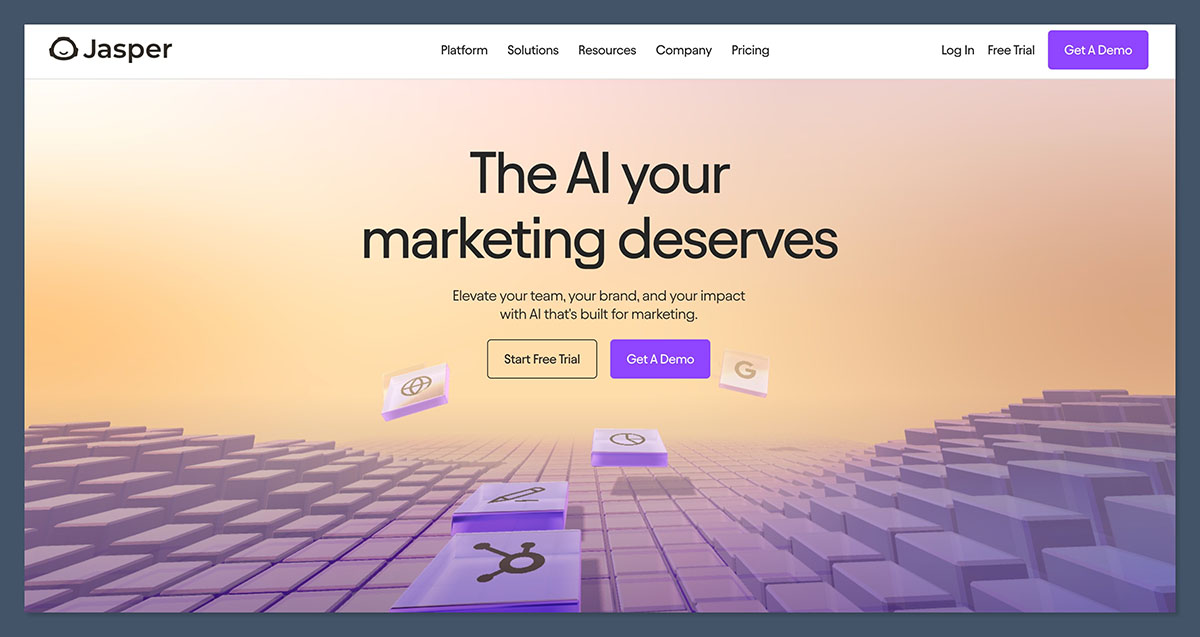
Starting price: $59 per seat / month (billed annually)
AI features: Brand voice training, Jasper Agents, no-code AI App Builder
Free plan: 7-day free trial on Pro plan
Jasper is the content platform I recommend when a marketing team needs AI that can produce on-brand writing at volume without constant editing.
The product has moved well beyond template-based copy generation; the 2026 version includes Brand Voices, multi-modal Knowledge assets, and Jasper Agents that can handle research, personalization, and campaign workflows end-to-end.
What we like about Jasper
- Strongest brand voice training in the AI content category
- Jasper Agents automate multi-step content workflows
- No-code AI App Builder (Studio) lets teams build custom tools
- Data is never used to train third-party models
What could be better
- Premium price compared to ChatGPT Plus or Claude Pro
- Plagiarism checker is a paid add-on, not included
- Surfer SEO integration requires a separate subscription
- No permanent free plan
Recent updates: Jasper has consolidated to two plans — Pro and Business — with the Business tier adding unlimited Brand Voices, API access, Jasper Agents, and SSO. Some older sources still reference a Creator plan, but it is no longer available for new users.
How Much Does Jasper Cost?
- The Pro plan costs $59 per seat per month on annual billing, or $69 per seat per month monthly
- Additional Pro seats are priced per user, so a team of three runs roughly $193 per month on monthly billing
- The Business plan is custom-priced and reportedly lands between $250 and $350 per month for small teams
- Annual billing saves approximately 20% across both tiers
- Nonprofits receive a 20% discount on application
Why Use Jasper in 2026?
The differentiator in 2026 is not content volume, it is content quality that matches a specific brand voice across every channel. Jasper is engineered around that problem in a way that generic AI writing tools are not.
For marketing teams producing hundreds of pieces per month across blog, email, ads, and social, the brand voice engine and the Agents layer save enough editing time to justify the premium.
For a solo blogger or a team producing under 10 pieces per month, ChatGPT Plus or Claude Pro is almost always the better value.
Jasper is suitable for:
- Marketing teams producing content across multiple channels
- Agencies managing multiple client brands
- Enterprises that need SSO, API access, and audit controls
Jasper is not suitable for:
- Solo writers who only need a drafting tool
- Teams with fewer than 10 content pieces per month
- Buyers looking for a permanent free tier
#4. Demandbase: Best for Account-Based Marketing
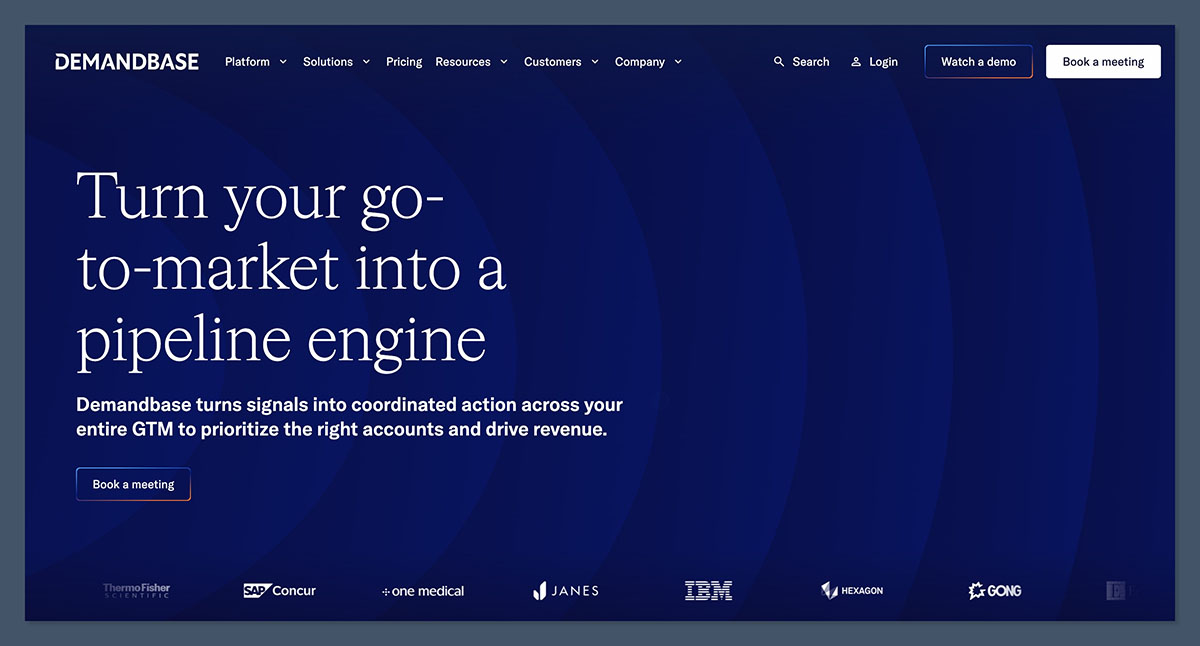
Starting price: Custom (median ~$65,000 per year)
AI features: Pipeline Predict AI, Agentbase agents, intent scoring
Free plan: Free Account ID edition and free intent data trial
Demandbase is the platform enterprise B2B marketing teams reach for when they need to orchestrate advertising, intent data, and sales intelligence across a named account list.
It is built around Account Intelligence rather than lead volume, which is the right abstraction for any company selling deals north of $50,000.
What we like about Demandbase
- One of the largest first-party intent datasets in B2B (2T+ signals per month)
- Native B2B demand-side platform for IP-based advertising
- Pipeline Predict AI scores accounts by conversion likelihood
- Consistently strong Customer Success Manager support
What could be better
- Pricing starts around $18K per year and can exceed $300K
- Onboarding fees of roughly $29,000 are common
- Requires a dedicated ABM operations person to use fully
- Minimum ad spend of $5K–$10K per month for the DSP
Recent updates: Demandbase has added Agentbase, a suite of AI agents that automate account research, ad creative generation, and sales play recommendations — a direct response to the rise of agentic workflows across the category.
How Much Does Demandbase Cost?
- Demandbase uses a platform fee plus per-user model, with no published rate card
- Per-user fees reportedly run between $1,200 and $3,000 per year depending on tier
- The Vendr median contract sits around $65,000 per year
- Full enterprise deployments with advertising can reach $200K–$300K+
- Demandbase offers a free Account ID edition for teams that want to test visitor identification
Why Use Demandbase in 2026?
B2B buying is now a buying-group sport, not an individual decision, and Demandbase is built for that reality. The platform identifies the accounts researching your category, maps the buying committee, and orchestrates advertising and sales plays around them.
For companies with ACVs above $50,000 and complex multi-stakeholder deals, Demandbase often pays for itself through a handful of influenced opportunities per year.
For mid-market teams without a dedicated ABM ops resource, the platform tends to be underused, and a lighter tool combined with strong sales intelligence delivers comparable results at a fraction of the cost.
Demandbase is suitable for:
- Enterprise B2B with $50K+ deal sizes
- Teams running programmatic advertising at scale
- Organizations with dedicated ABM operations
Demandbase is not suitable for:
- SMBs and early-stage startups
- Teams without a mature ABM playbook
- Companies with ACVs below $20,000
#5. Perplexity: Best for Research and Strategic Planning
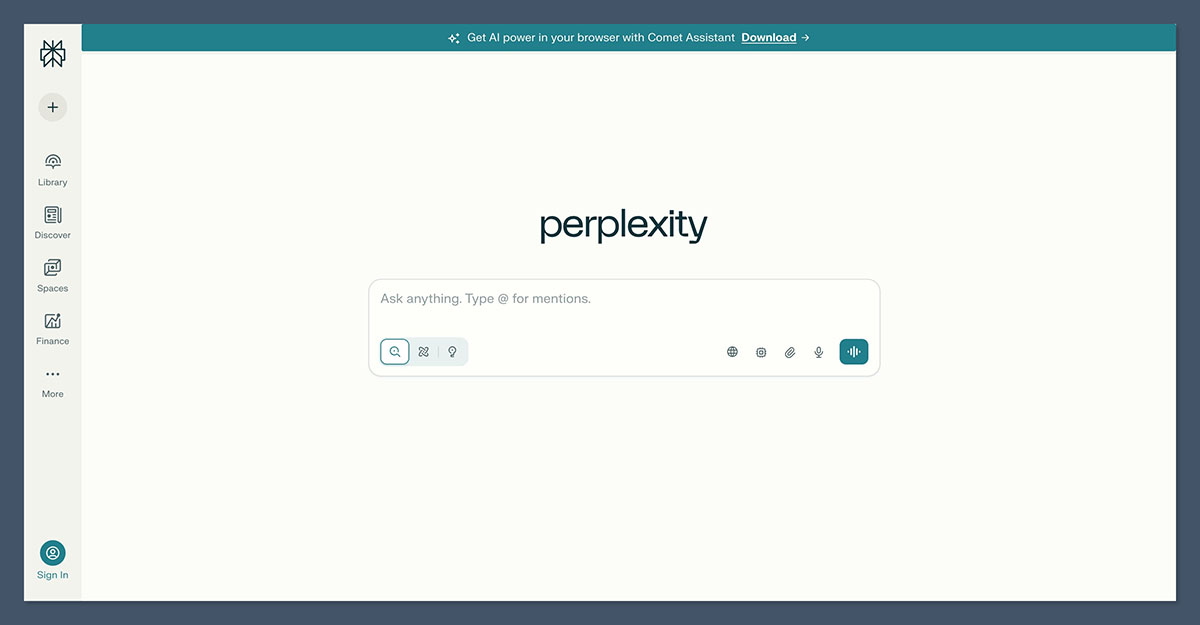
Starting price: Free, Pro at $20 per month
AI features: Cited answers, Deep Research mode, multi-source synthesis
Free plan: Yes, with limited Pro searches
Perplexity has quietly become the research layer most B2B knowledge workers default to in 2026.
Unlike general-purpose chatbots, it is built around cited, multi-source answers, which means the output is auditable — a non-negotiable feature for anyone doing competitive analysis, market sizing, or vendor evaluation.
What we like about Perplexity
- Every answer is sourced with clickable citations
- Deep Research mode runs multi-step investigations across dozens of sources
- Generous free tier for individual users
- Strong performance on comparative and technical queries
What could be better
- Not designed for long-form content generation
- No native team or workspace features on the free tier
- Source quality varies, so human review is still needed for high-stakes work
- Enterprise features and data controls are behind higher-priced tiers
How Much Does Perplexity Cost?
- The free tier includes unlimited standard searches and a limited number of Pro searches per day
- Perplexity Pro is $20 per month or $200 per year
- Enterprise plans are custom-priced and include SOC 2 compliance and admin controls
- Students receive free Pro access through partner programs
Why Use Perplexity in 2026?
The research workflow has shifted from “open 15 tabs and synthesize manually” to “ask one question and get a cited answer in 20 seconds.” Perplexity is the cleanest expression of that shift.
For B2B teams, this matters in two places: competitive research (track how your category is evolving) and buyer research (understand a prospect’s business before a call).
It is also one of the major AI search surfaces your brand needs to appear in, which makes it worth using daily just to see how it cites your category.
Perplexity is suitable for:
- Analysts and knowledge workers doing daily research
- Sales teams preparing for discovery calls
- Marketers tracking category evolution and citations
Perplexity is not suitable for:
- Long-form content generation (use Claude or Jasper)
- Teams needing structured workspace collaboration on free tier
- Research that requires paywalled academic sources
#6. Microsoft Copilot for 365: Best Productivity Layer
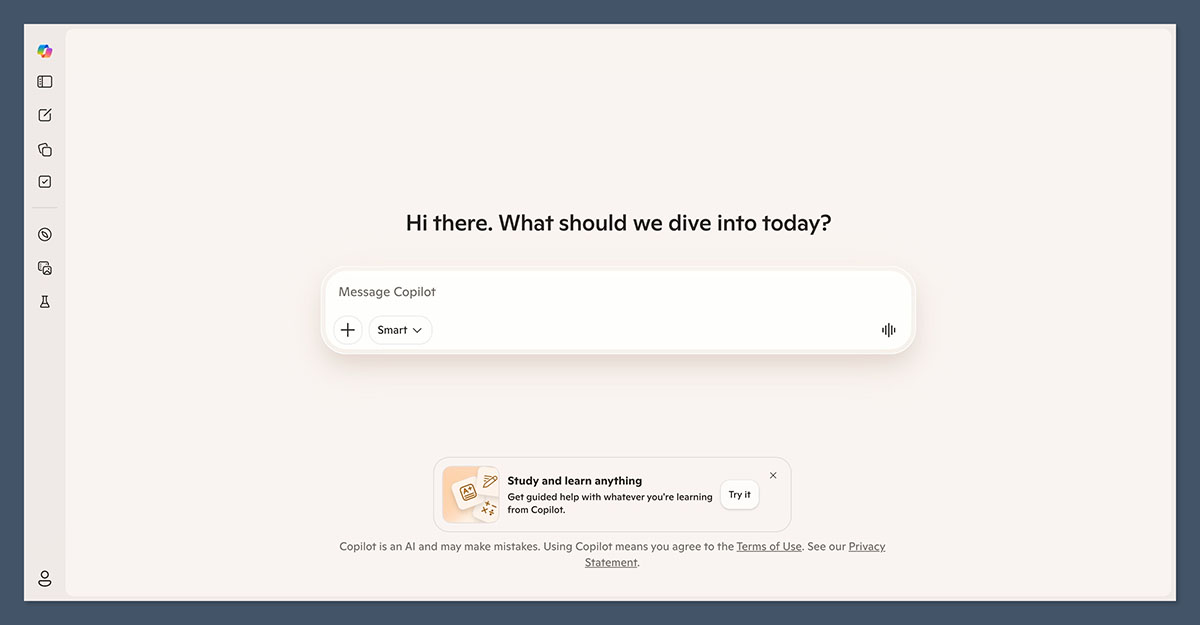
Starting price: $30 per user / month (add-on to M365 subscription)
AI features: In-app AI across Word, Excel, PowerPoint, Outlook, Teams
Free plan: No, requires existing M365 subscription
For organizations already running on Microsoft 365, Copilot is the most efficient way to add AI to daily work without introducing a new tool to train.
It drafts emails in Outlook, summarizes Teams meetings, generates formulas in Excel, and builds PowerPoint decks from prompts or existing documents.
What we like about Microsoft Copilot for 365
- Native integration across every M365 application
- Uses your organization’s data (with appropriate permissions) for context
- Enterprise-grade compliance and data residency controls
- No new interface for users to learn
What could be better
- Expensive at $30 per user per month on top of existing M365 licenses
- Feature depth varies significantly by app (Excel Copilot is weaker than Word)
- Adoption often lags because users forget to invoke it
- Locked to the Microsoft ecosystem
How Much Does Microsoft Copilot for 365 Cost?
- $30 per user per month, billed annually, as an add-on to an eligible M365 subscription
- Requires Business Standard, Business Premium, E3, E5, or equivalent as the base license
- No per-query limits within normal usage
- Enterprise Agreements often unlock volume discounts
Why Use Microsoft Copilot for 365 in 2026?
The strategic question in 2026 is not whether to deploy AI inside your productivity suite, it is which suite to standardize on.
For Microsoft-centric organizations, Copilot is the default answer because it inherits all the governance, identity, and compliance work already done for M365.
The ROI case is strongest in knowledge-heavy roles (analysts, managers, consultants) where drafting, summarizing, and searching dominate the day. For smaller teams or Google Workspace shops, Gemini for Workspace is the natural equivalent at $20 per user per month.
MS Copilot is suitable for:
- Microsoft-centric organizations of 100+ users
- Knowledge-heavy roles with lots of drafting and summarizing
- Enterprises with strict compliance requirements
MS Copilot is not suitable for:
- Google Workspace organizations (use Gemini instead)
- Teams under 10 people with light document workloads
- Companies not already on an eligible M365 plan
How to Choose the Right B2B AI Tools
The mistake most teams make is starting with the tools and working backward to the strategy. The sharper approach is to cluster your needs by job to be done, then pick one tool per cluster rather than building a stack of 12 overlapping platforms. When evaluating any B2B AI tool in 2026, work through these factors in order:
- Job to be done: Is this tool solving a specific bottleneck (pipeline generation, content volume, call coaching) or just adding capability? If you cannot name the bottleneck in one sentence, do not buy the tool.
- Stack fit: Does it integrate cleanly with your CRM, marketing automation, and data warehouse? Integrations that work on day one save more money than discounts negotiated at renewal.
- Pricing model: Is it per-seat, credit-based, or usage-based? Credit-based pricing (Apollo, some Gong modules) can push real costs 2–3x above sticker price if you do not model consumption upfront.
- Time to value: How long until the tool produces ROI? Anything requiring three months of implementation work needs a dedicated owner, or it will become shelfware.
- Agent vs. assistant: Is this tool an assistant (you prompt it) or an agent (it executes workflows autonomously)? The answer changes how you staff around it.
- AI search visibility: B2B buyers now discover vendors through ChatGPT, Perplexity, and Gemini. Does your stack include any visibility into how AI systems reference your brand and category?
- Contract terms: Multi-year commitments, auto-renewal uplifts, and minimum seat counts can double your real costs. Negotiate these before you sign, not at renewal.
- Adoption plan: Every tool in this guide rewards teams that build workflows around it and punishes teams that treat it as a side project. Budget for enablement alongside licenses.
Starter Stacks by Team Profile
Here are three stacks I would build today, organized by team maturity:
Solo consultant or small agency ($100–$200 per month): Perplexity Pro for research, Claude Pro or ChatGPT Plus for drafting, Apollo free tier for prospecting, and a single workflow automation tool like Zapier or n8n. Total spend stays under $200 per month and covers research, content, outbound, and automation.
Scaling B2B SaaS team ($2K–$5K per month): Apollo Professional for sales, Jasper Pro for content, Perplexity Pro for research, and Microsoft Copilot or Gemini for productivity. Add one AI search visibility tool to track how your category is referenced in ChatGPT, Perplexity, and Gemini. Skip Gong and Demandbase until you have at least 15 reps or $50K+ ACV.
Mid-market revenue organization ($20K+ per month): Salesforce with Einstein as the system of record, Gong for call intelligence, Apollo or Outreach for execution, Demandbase for ABM, Jasper Business for content operations, and Microsoft Copilot deployed across the org. Plan for a dedicated RevOps owner — at this spend level, the tools cost less than the person running them.
How We Test B2B AI Tools
Our team has spent more than 200 hours hands-on with the 18 B2B AI tools evaluated for this guide, covering sales, marketing, research, automation, and horizontal productivity categories. We focus on six core criteria, each weighted to reflect what matters most to B2B buyers in 2026:
| Criteria | Weight | What we evaluate |
|---|---|---|
| Feature depth | 25% | Quality of core AI features, agent capabilities, and integrations with CRMs and marketing platforms |
| Pricing and value | 20% | Transparency, total cost of ownership including overages, contract flexibility |
| Data quality and accuracy | 20% | For data-driven tools: accuracy of contact data, intent signals, and AI-generated outputs |
| Time to value | 15% | How quickly teams can deploy the tool and see measurable results |
| Ecosystem fit | 10% | How well the tool integrates with existing stacks and whether it replaces or adds to current tools |
| Support and reputation | 10% | Customer success quality, G2 and Capterra scores, and publicly reported implementation outcomes |
For each tool, we verified pricing directly against current vendor pages, cross-checked with third-party data from Vendr, G2, and recent buyer reports, and where possible ran the platform inside a test workspace to validate the feature set we describe.
AI tool pricing in 2026 is unusually fluid — especially for credit-based models — so we flag the gap between sticker price and realistic total cost wherever it matters.
Key Takeaways
- Apollo.io is our top pick for B2B sales, combining a 210M+ contact database with sequencing and AI enrichment for teams that want one prospecting tool instead of three
- Pricing ranges from free (Perplexity, Apollo’s free tier) to enterprise contracts north of $300K per year (Demandbase at the top end) — most mid-market teams will land between $50 and $150 per user per month
- Every tool on this list has shipped major AI features in the past 12 months, but the credit-based pricing models on platforms like Apollo and Gong can push real costs well above the sticker price
- B2B buyers now discover vendors through ChatGPT, Perplexity, and Gemini, so any AI stack built in 2026 should include at least one tool focused on AI search visibility alongside traditional SEO
- The sharpest shift this year is the move from prompt-based tools to AI agents that execute multi-step workflows across CRM, content, and outreach
Final Verdict: Which B2B AI Tools Do I Recommend?
The right answer depends on what you are trying to fix, but if I were building a B2B AI stack from scratch today, I would start with Apollo.io for sales, Jasper for content, Perplexity for research, and Microsoft Copilot or Gemini for productivity.
That combination covers roughly 80% of what most B2B teams need and lands well under $500 per user per month at mid-market scale.
Gong and Demandbase are the right additions once you hit the maturity thresholds where they pay for themselves — 25+ sales reps for Gong, $50K+ ACV for Demandbase. Below those thresholds, they are more platform than you need.
The overlay that almost no 2026 B2B stack addresses yet is AI search visibility.
Buyers are now discovering vendors through ChatGPT, Perplexity, and Gemini, and the brands showing up in those answers are winning category association the same way early Google SEO winners did a decade ago.
Whichever tools you choose from this list, build in a way to track how AI systems interpret and reference your brand — that visibility is going to matter more every quarter.

