

After testing more than 30 free AI tools across writing, research, prospecting, meeting intelligence, and content workflows, our team and I have shortlisted the seven free B2B AI tools that earn their place in a real working stack in 2026.
Claude is our top pick for the second year running, offering the strongest free-tier reasoning, a 200K token context window, and the most consistent output for document-heavy B2B work.
In this guide, I’ll walk you through the standout features, free-tier limits, and trade-offs of each tool, so you can build a no-budget AI stack that actually moves work forward instead of stalling at the first usage cap.
Our Top 7 Free B2B AI Tools
- Claude – Best for writing, analysis, and document work
- ChatGPT – Best general-purpose AI assistant
- Perplexity – Best for research with cited sources
- Gemini – Best for Google Workspace users
- Apollo.io – Best free B2B prospecting database
- HubSpot CRM – Best free CRM with AI
- Fireflies.ai – Best AI meeting assistant
I’ve recently updated this guide to reflect the April 2026 model tier changes, where major providers restricted flagship models (GPT-5.4, Claude Opus 4.6, Gemini 3.1 Pro) to paid tiers, and refreshed every free-tier limit based on current product pages.
Free B2B AI Tools Comparison Table
Take a look at our top free B2B AI tool picks side-by-side to see which best fits your stack:
| Tool | Best For | Free Tier | Key Limit | Paid Plan From |
|---|---|---|---|---|
| Claude | Writing, analysis, documents | Sonnet 4.6 + 200K context | Daily message cap | $20/month |
| ChatGPT | General-purpose assistant | GPT-4o mini, dynamic limits | Lighter model on free tier | $8/month (Go) |
| Perplexity | Research with citations | Unlimited basic searches | 5 Pro searches/day | $20/month |
| Gemini | Google Workspace users | Standard model, in-app AI | No Gemini Advanced | $20/month |
| Apollo.io | B2B prospecting | 275M+ contacts, 2 sequences | ~75 export credits/month | $49/user/month |
| HubSpot CRM | Pipeline management | Unlimited contacts, 2 seats | Limited automation | $15/seat/month |
| Fireflies.ai | Meeting transcription | Unlimited recordings | 5 advanced summaries/month | $10/seat/month |
#1. Claude: Best for Writing, Analysis, and Document Work
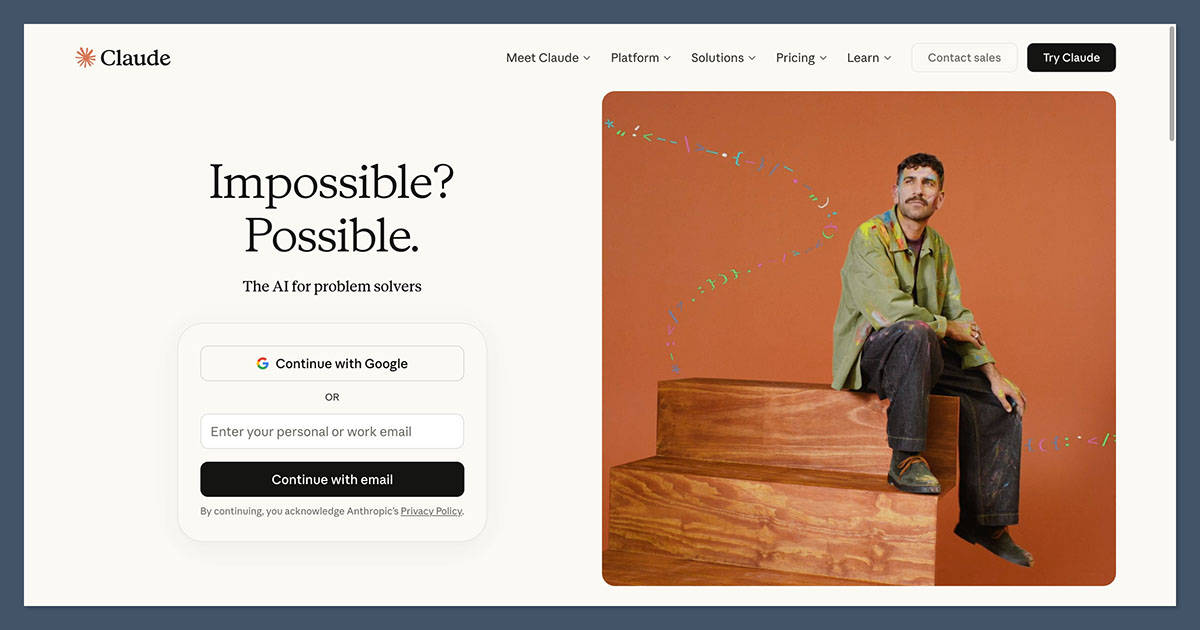
- Free tier: Daily message cap on Sonnet 4.6, 200K token context window
- Best for: B2B teams whose work lives inside long documents, briefs, and proposals
Claude is the best free AI tool I’ve tested for B2B work in 2026. Anthropic positions Claude as a more thoughtful alternative to ChatGPT, and the free tier is primarily distinguished by its 200,000 token context window, which is consistent across all plans, including the free one.
In practice, that means you can paste a full client brief, a competitive teardown, or a 40-page report into a single conversation without chunking it.
The free tier runs Sonnet 4.6 by default, with Haiku 4.5 and Sonnet 4.5 also accessible from the model dropdown. The “Extended thinking” toggle lets the model spend more compute on harder problems, which matters when you’re asking it to reason through a strategy doc rather than just rewrite a paragraph.
Pros
- 200K token context window on the free plan
- Strongest reasoning and writing quality of any free tier
- Preserves your voice instead of overwriting it
- Holds context across long documents reliably
Cons
- Daily message cap on the free plan, especially on heavy documents
- No native web search on the free tier
- Phone number required at signup
- Flagship Opus model is paid-only
Recent updates: Anthropic restricted Claude Opus 4.6 to paid tiers in April 2026, with free users now getting Sonnet and Haiku variants. Sonnet 4.6 still tops most free-tier benchmarks for writing and code reasoning.
For B2B work specifically, Claude’s edge is in how it handles dense input. When I paste a 1,200-word client brief and ask what someone actually wants, Claude tends to surface the buried ask rather than just paraphrasing the surface.
It also critiques arguments rather than just polishing grammar, which is the difference between an editor and a spellchecker on a pitch or proposal.
How Much Does Claude Cost?
- Free plan: Sonnet 4.6 with daily message limits, 200K context window
- Claude Pro: $20 per month, higher limits and access to more models
- Claude Max: higher tier for power users with extended limits
- Claude Team: starts at $25 per user per month
Why Use Claude in 2026?
For AEO and content-led B2B work, Claude’s free tier handles the longest, most context-heavy tasks better than any other free assistant. That matters when your input is a 30-page audit, a competitor citation map, or a research dump that other tools have to summarize before they can answer.
If most of your day is spent inside walls of text, Claude is the free tool to start with.
Claude is suitable for:
- B2B content, strategy, and research teams
- Founders drafting proposals, briefs, or long-form analyses
- Anyone working with documents longer than 5,000 words
Claude isn’t suitable for:
- Real-time research that needs current web sources
- Heavy daily volume on a single account (limits hit fast)
- Image generation or multimodal creative work
#2. ChatGPT: Best General-Purpose AI Assistant
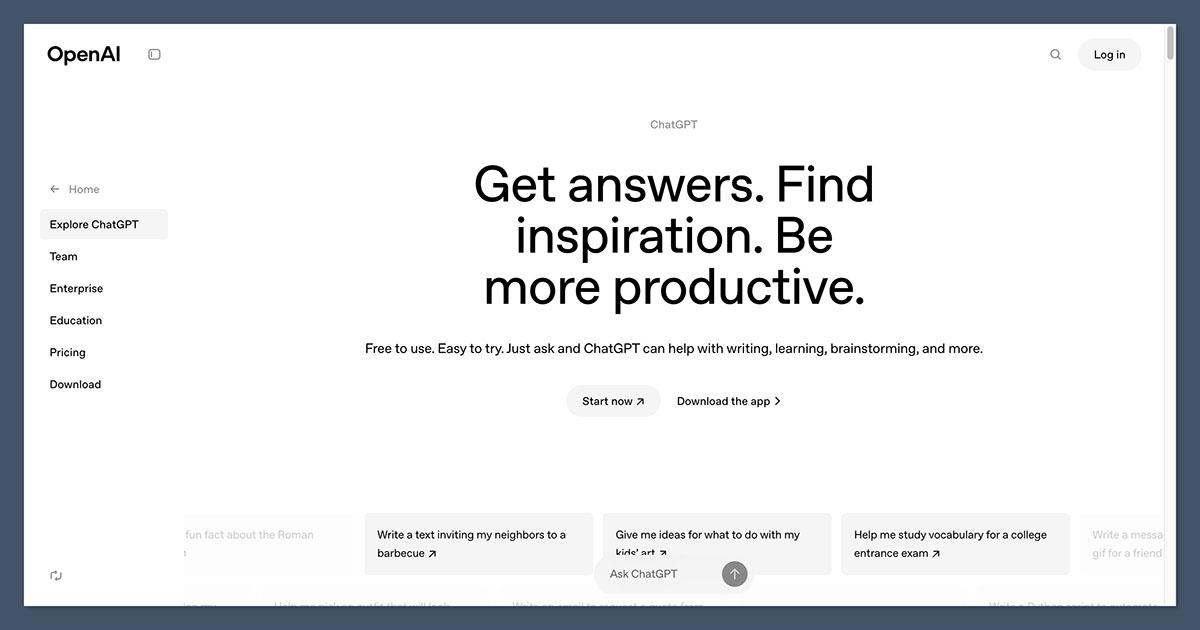
- Free tier: Access to GPT-4o mini with dynamic rate limits
- Best for: Teams that want one assistant for writing, brainstorming, basic coding, and casual research
ChatGPT is the most familiar AI tool on the market, and the free tier is still the most generous starting point for general use. ChatGPT’s free tier gives you access to OpenAI’s current flagship model, with dynamic rate limits.
Once you hit the cap, it falls back to a lighter model rather than locking you out, which keeps the assistant usable across a full workday.
For B2B teams, ChatGPT works best as a generalist. It drafts emails, brainstorms angles, builds rough ICP frameworks, writes objection-handling scripts, and handles light coding for spreadsheets and quick automations.
It is rarely the best at any single task, but it is usually good enough across all of them.
Pros
- Most familiar interface for new AI users
- Generous dynamic free-tier limits
- Native image generation included
- Voice mode and basic web browsing on free tier
Cons
- Tends to over-edit and sand off your voice
- Logical critiques are hedged and hard to action
- Flagship models reserved for paid plans
- Context handling weaker than Claude on long docs
Recent updates: OpenAI moved GPT-5.4 to paid plans only in 2026, leaving GPT-4o mini as the default free model with dynamic upgrades to fuller models for short bursts.
What I noticed across testing: ChatGPT is the strongest tool for users who want one box to type into for everything. It is not the strongest tool for any specific B2B task.
If you find yourself needing serious writing depth, switch to Claude. If you need cited research, switch to Perplexity. ChatGPT is the connective tissue, not the specialist.
How Much Does ChatGPT Cost?
- Free plan: GPT-4o mini with dynamic rate limits, image generation, voice mode
- ChatGPT Go: $8 per month, higher limits
- ChatGPT Plus: $20 per month, access to flagship models
- ChatGPT Pro: $200 per month for power users
- ChatGPT Team and Enterprise: custom pricing
Why Use ChatGPT in 2026?
ChatGPT remains the default starting point for B2B teams that want broad capability without committing to a learning curve.
The free tier covers email drafts, ad copy, simple analysis, and image creation in one place. Pair it with a specialist (Claude for writing, Perplexity for research) and the combined free stack covers most knowledge work.
ChatGPT is suitable for:
- Generalists who want one assistant for everything
- Marketers needing fast short-form copy
- Teams that want native image generation in the same interface
ChatGPT isn’t suitable for:
- Voice-sensitive long-form writing
- Cited, source-backed research
- Deep document analysis on the free tier
#3. Perplexity: Best for Research With Cited Sources
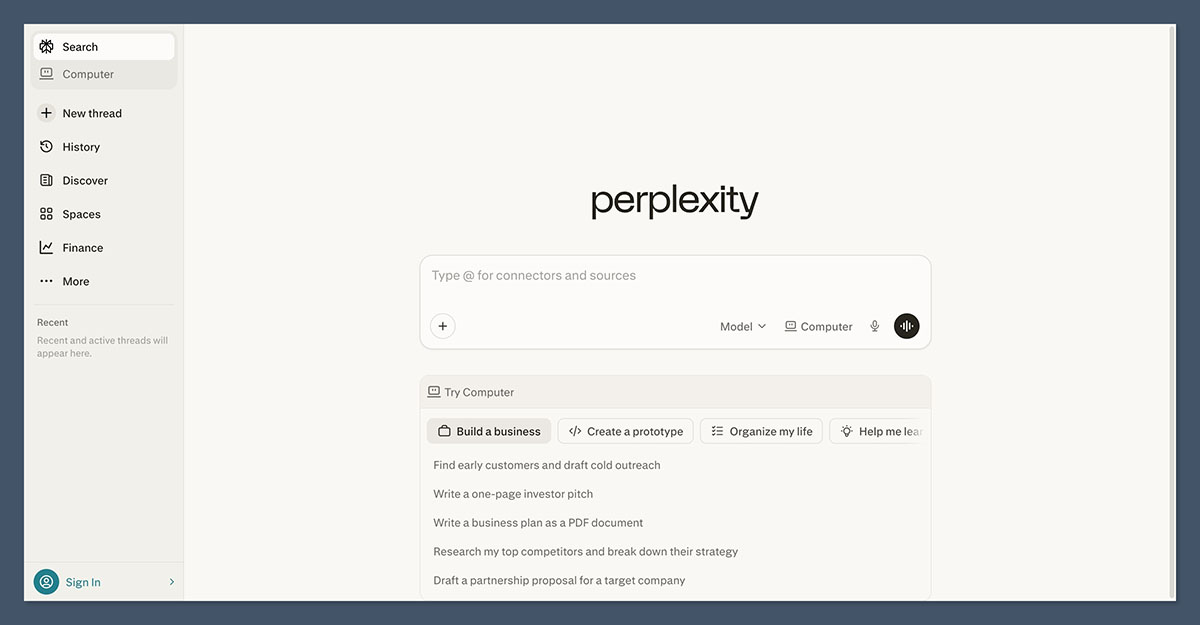
- Free tier: Unlimited basic searches, 5 Pro searches per day
- Best for: Sales reps, marketers, and analysts who need fast, sourced research
Perplexity is the research engine I reach for when I need an answer I can defend. Perplexity searches the web, synthesizes information from multiple sources, and cites where it found each piece.
The free tier gives you unlimited basic searches and five Pro searches per day, which use more advanced models and go deeper.
For B2B work, this is the closest free tool to a sourced research assistant. Account research before a discovery call, competitor positioning checks, citation tracking for your own brand in AI answers, and quick fact-finding for proposal writing all benefit from Perplexity over a generic chatbot.
The inline citations are the feature that matters most.
Pros
- Inline citations make answers verifiable
- Unlimited basic searches on the free plan
- Multi-model dropdown including Sonar, Gemini, GPT, Claude
- Deep Research available on the free tier
Cons
- File and image uploads paywalled
- Most connectors require an upgrade
- Pro search limits cut hard in 2026
- Weaker than Claude or ChatGPT on long-form writing
Recent updates: Perplexity slashed daily query limits sharply in 2026 and faced criticism for silently routing paid queries to lighter models. The free tier still works well for quick sourced research, but power users feel the new ceiling fast.
The point of Perplexity in a B2B stack is not to replace a chatbot. It is to handle the queries where you need sources, particularly for AEO work, competitor research, or any time you need to confirm whether a claim has actually been published somewhere.
Use the five daily Pro searches for the questions that matter and basic search for everything else.
How Much Does Perplexity Cost?
- Free plan: unlimited basic searches, 5 Pro searches per day, Deep Research access
- Perplexity Pro: $20 per month, higher Pro search limits, file uploads, connectors
- Perplexity Max: $200 per month for power users with the highest limits
Why Use Perplexity in 2026?
For any B2B team doing AEO, competitive research, or buyer research, Perplexity is the free tool that mirrors how AI search engines actually work.
Watching what it cites for queries about your category is also a free, lightweight way to monitor your own visibility in AI-driven search before paying for a dedicated tracking tool.
Perplexity is suitable for:
- SDRs doing pre-call account research
- Marketers tracking how their brand appears in AI search
- Analysts who need cited, current information
Perplexity isn’t suitable for:
- Long-form drafting and editing
- Working with uploaded files on the free plan
- High-volume daily research
#4. Gemini: Best for Google Workspace Users
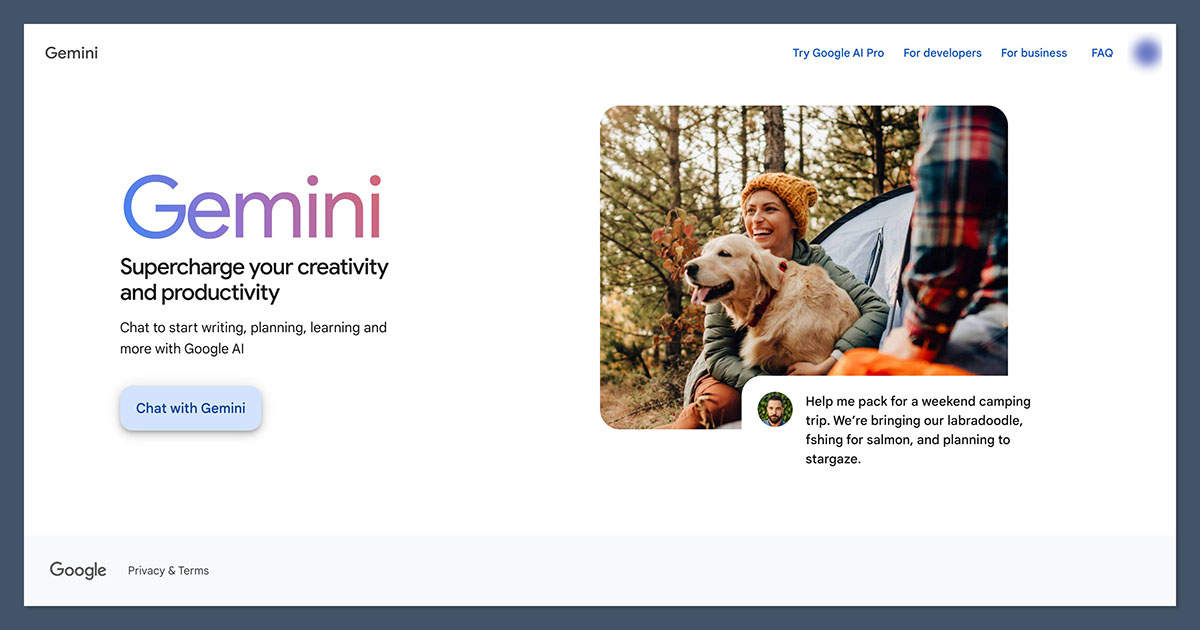
- Free tier: Standard Gemini model, embedded across Gmail, Docs, Sheets, Drive
- Best for: Teams already running on Google Workspace
Gemini is the obvious free choice for B2B teams that already live inside Google Workspace. It is optimized for quick assists within Google tools, not extended conversations or complex analysis.
The free tier also excludes Gemini Advanced, meaning you are working with the standard model.
The strength of Gemini’s free tier is not the chatbot itself. It is the way it sits inside the apps you already use.
Drafting an email reply in Gmail, summarizing a meeting note in Docs, or building a basic formula in Sheets all happen without switching tabs. For teams that send dozens of internal messages a day, that compounds.
Pros
- Embedded across Gmail, Docs, Sheets, Drive
- Real-time, multimodal capability
- Strong for quick in-app assists
- Already authenticated for Workspace users
Cons
- Free tier excludes Gemini Advanced
- Weaker reasoning than Claude or ChatGPT
- Drifts on nuanced questions about long documents
- Tends to rewrite voice rather than preserve it
Recent updates: Google moved Gemini 3.1 Pro to paid tiers only in 2026, leaving Flash variants on the free plan. The in-app integrations across Workspace continue to expand.
The way to use Gemini’s free tier in a B2B context is as an in-app helper, not as a primary chatbot. Open a long doc in Docs and ask it to summarize the brief.
Reply faster in Gmail. Write a SUMIF in Sheets without looking it up. Save Claude or ChatGPT for the work that needs more depth.
How Much Does Gemini Cost?
- Free plan: standard Gemini model, full Workspace integration
- Gemini Advanced (Google AI Pro): $20 per month, access to flagship models and higher limits
- Google AI Ultra: higher tier for power users with priority access to new features
Why Use Gemini in 2026?
If your team’s day already runs through Gmail, Docs, and Sheets, the most efficient free AI is the one already sitting in those tabs.
Gemini removes the cost of context-switching and is the easiest free AI to roll out across a team that has not yet adopted dedicated AI tools.
Gemini is suitable for:
- Google Workspace teams looking for low-friction AI
- Operations and admin work inside Gmail and Docs
- Quick spreadsheet and email assistance
Gemini isn’t suitable for:
- Heavy reasoning, writing, or long-document analysis
- Voice-sensitive editing
- Teams not already inside Google Workspace
#5. Apollo.io: Best Free B2B Prospecting Database
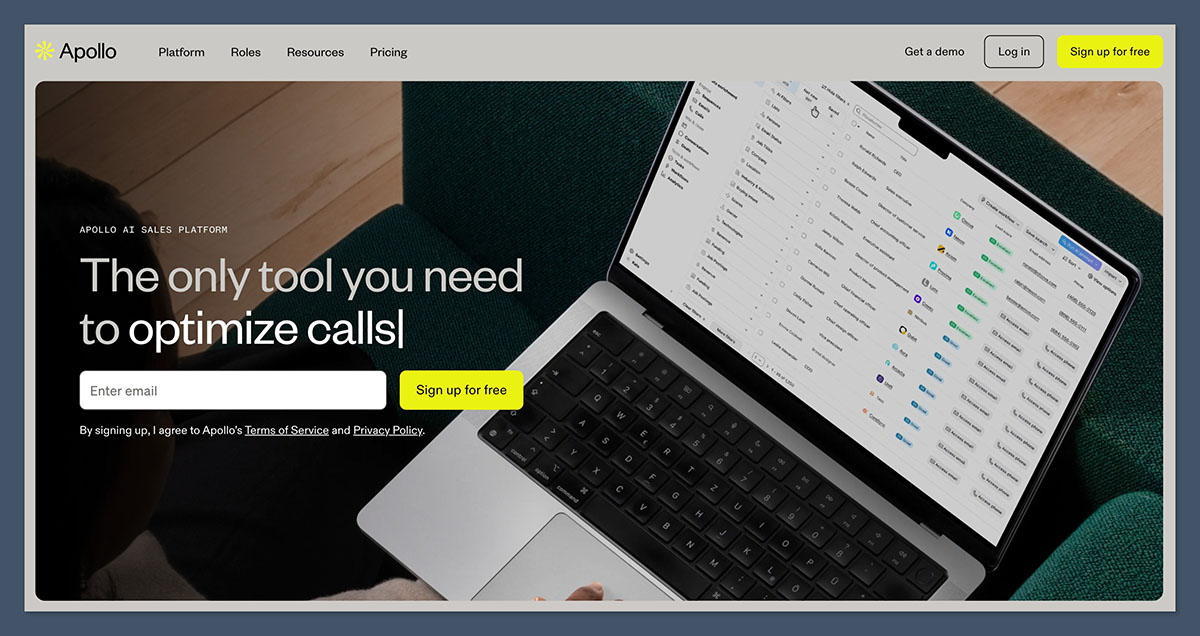
- Free tier: Access to 275M+ contact database, 2 active sequences, monthly export credits
- Best for: SDRs and founders building outbound from scratch
Apollo’s free tier is the strongest free entry point into B2B prospecting in 2026. Apollo’s free tier covers more of the prospecting workflow than most people realize.
You get access to a B2B database of over 275 million records, basic search filters, around 10,000 email credits per month, and two email sequences.
Search filters cover industry, headcount, tech stack, and funding stage, which lets a small team build targeted lists without ZoomInfo money.
The architecture matters here. Apollo separates contact discovery from contact reveal. Searching doesn’t consume credits, but exporting or enriching does, which means you can filter aggressively before spending your monthly allowance. That makes the free tier far more usable than the credit number alone suggests.
Pros
- 275M+ contact database on the free plan
- Built-in sequences and CRM sync
- Search before you spend credits
- Native HubSpot and Salesforce integration
Cons
- Email accuracy around 85-90%, real bounce risk
- AI personalization based on static fields, not live signals
- Mobile credits are limited
- Quality varies because data is user-contributed
Recent updates: Apollo was named MarTech Breakthrough Award winner for “Best AI-Powered Sales Solution” in 2026, with the AI Research Agent now driving more meetings on premium plans, while the free tier continues to expand on data access.
The honest caveat: do not send Apollo exports unverified at volume. Apollo data is heavily user-contributed, so quality varies wildly. Bounce rates can spike when teams skip verification on Apollo exports.
Always run them through a dedicated verifier before sending. Pair Apollo with Hunter or a similar verifier on the free tier and you protect your sender reputation while still scaling outreach.
How Much Does Apollo Cost?
- Free plan: 275M+ database, ~75 export credits per month, 2 active sequences, basic CRM integration
- Basic: $49 per user per month (annual)
- Professional: from ~$79 per user per month
- Organization: $119 per user per month (annual)
Why Use Apollo in 2026?
For founders and small SDR teams, Apollo’s free tier proves whether outbound works for your motion before you commit to a paid stack. Build one targeted list, run two sequences, measure reply rates, then upgrade when the motion is validated and the bottleneck is volume rather than figuring out the message.
Apollo is suitable for:
- Founders running early outbound experiments
- Small SDR teams building targeted ICP lists
- Teams that want prospecting and sequencing in one tool
Apollo isn’t suitable for:
- High-volume outbound on a single domain
- Teams that need the freshest verified mobile numbers
- Workflows that depend on signal-based intent data
#6. HubSpot CRM: Best Free CRM With AI
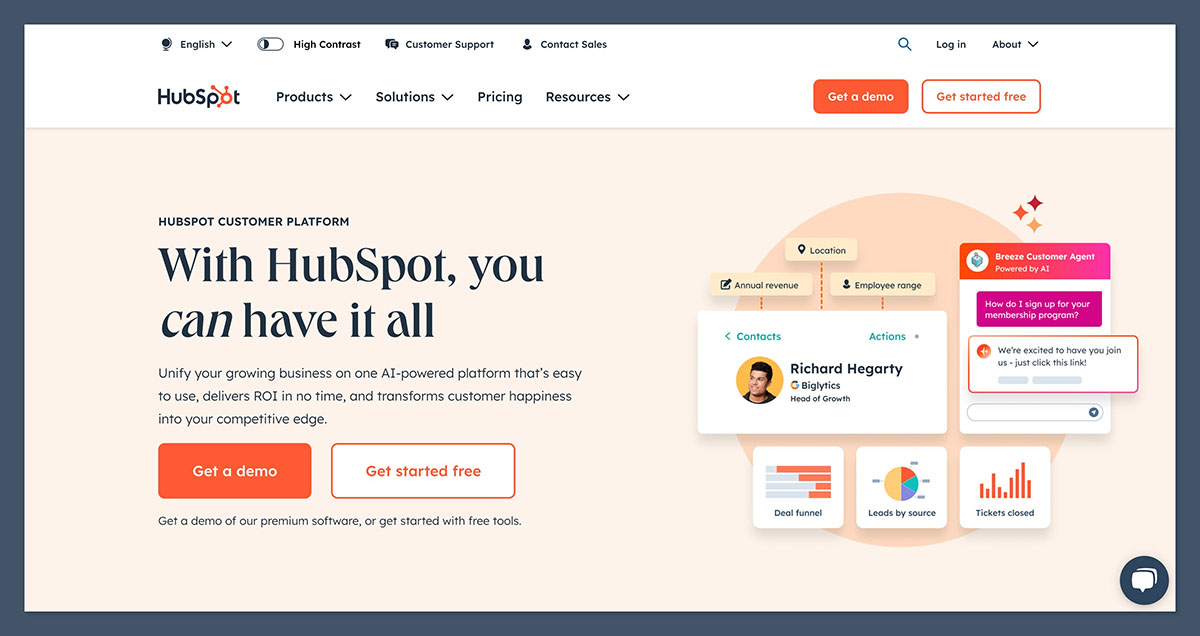
- Free tier: Unlimited contacts, 2 seats, 1 deal pipeline, basic AI features
- Best for: Founders and small teams who want pipeline tracking without a CRM bill
HubSpot’s free CRM is the rare free product that does not feel rationed. HubSpot’s free tier is genuinely generous as a CRM: $0 for 2 seats, unlimited contacts, 1 deal pipeline, meeting scheduling, and Gmail/Outlook integration.
They’ve included Breeze AI Suite in the free plan for basic AI-assisted tasks. For a small B2B team, that covers the core pipeline workflow without forcing an upgrade in the first quarter.
The strength here is durability rather than flash. The free CRM does not run on a credit system that resets monthly.
You get a working pipeline, contact records, deal tracking, meeting links, and basic email tracking, and those features stay available as long as you stay under the seat cap.
Pros
- Unlimited contacts on the free plan
- 2 seats included, no credit system
- Native integrations with Apollo, Fireflies, and Gmail
- Breeze AI Suite included for basic AI tasks
Cons
- Limited to 1 deal pipeline on free
- Reporting and forecasting paywalled
- Workflow automation locked behind paid tiers
- Marketing Hub AI features start at $800/month
Recent updates: HubSpot expanded Breeze AI features within the free tier in 2026, including basic email summarization and contact enrichment, while keeping advanced workflow AI on Marketing Hub Pro.
The HubSpot free CRM is the spine of any free B2B AI stack. Apollo finds the contacts, Fireflies records the calls, and HubSpot is where everything lands.
The integrations with Apollo and Fireflies on free tiers mean the workflow holds together without copy-paste between tools, which is the point at which most free stacks usually break down.
How Much Does HubSpot Cost?
- Free CRM: 2 seats, unlimited contacts, 1 deal pipeline, basic AI
- Sales Hub Starter: from $15 per seat per month
- Sales Hub Professional: from $90 per seat per month
- Marketing Hub Professional: $800 per month, includes deeper AI features
Why Use HubSpot in 2026?
For B2B teams without a CRM yet, HubSpot’s free tier is the easiest place to start. It eliminates the spreadsheet phase of pipeline management, gives reps a place to log every touchpoint, and stays free indefinitely as long as the team stays small.
When you outgrow the free tier, the paid plans pick up where it left off without forcing a migration.
HubSpot is suitable for:
- Founders setting up their first CRM
- Small B2B teams under 2 active sales seats
- Inbound-led GTM motions
HubSpot isn’t suitable for:
- Teams that need multiple deal pipelines on free
- RevOps reporting and forecasting requirements
- Heavy automation without paid tiers
#7. Fireflies.ai: Best AI Meeting Assistant
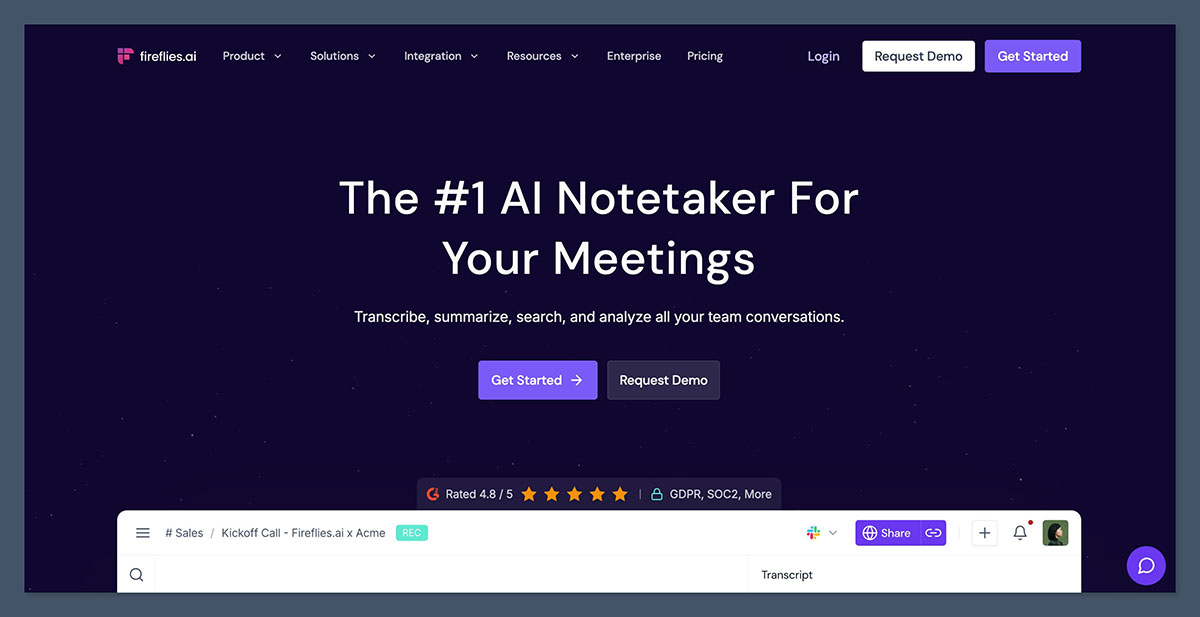
- Free tier: Unlimited recording and transcription, 5 advanced AI summaries per month
- Best for: B2B teams that run multiple discovery calls and demos per week
Fireflies.ai is the free tool that quietly recovers the most time across a B2B sales week. It joins calls on Zoom, Teams, and Google Meet, transcribes everything, and produces searchable notes that you can pull from for follow-ups, CRM logging, and internal recaps.
Fireflies offers unlimited recordings and unlimited transcriptions, with five advanced AI summaries per month on the free tier.
For B2B reps and founders, the value is in coverage rather than depth.
Even without the advanced summaries, having every call transcribed and searchable means objections, competitor mentions, and pricing questions are no longer reliant on memory.
Pair it with HubSpot’s free CRM, and call notes flow into the right contact records.
Pros
- Unlimited recording and transcription on free
- 50+ integrations available across plans
- Searchable across past calls
- Joins Zoom, Teams, and Google Meet
Cons
- Only 5 advanced AI summaries per month on free
- CRM sync to Salesforce and HubSpot is paid
- Coaching and conversation intelligence locked behind paid plans
- Can feel intrusive if you don’t notify call participants
Recent updates: Fireflies expanded its integration library to over 50 apps in 2026, while keeping the unlimited transcription model on the free tier, which keeps it ahead of competitors like tl;dv on raw volume.
One thing worth flagging: meeting recording rules vary by jurisdiction.
Notify participants, set expectations at the start of the call, and keep transcripts inside your CRM rather than scattered. The tool is generous, but the responsibility for how transcripts are handled sits with the user.
How Much Does Fireflies Cost?
- Free plan: unlimited recording and transcription, 5 advanced AI summaries per month
- Pro: from $10 per seat per month, unlimited summaries
- Business: from $19 per seat per month, conversation intelligence
- Enterprise: custom pricing with deeper CRM sync
Why Use Fireflies in 2026?
For B2B teams running discovery calls, demos, and customer interviews, Fireflies eliminates the post-call admin tax. Reps spend more time on the next conversation rather than writing up the last one, and founders get a searchable record of every customer signal they’ve heard, which compounds over time into a real research asset.
Fireflies is suitable for:
- Sales teams running multiple calls per day
- Founders doing customer discovery interviews
- Teams that want a searchable archive of every call
Fireflies isn’t suitable for:
- Teams that need conversation intelligence on free
- Workflows requiring native CRM auto-sync at $0
- Highly regulated industries with strict recording rules
How Do I Choose the Right Free B2B AI Tool?
To choose the right free B2B AI tool, you should evaluate seven key factors that determine whether a free tier will actually carry real work or stall out within a week. Free is only useful if the limits match how you work.
Below is a checklist of factors I run through whenever a new free AI tool enters the stack:
| 1 | Job to be done: Is the tool solving prospecting, writing, research, meetings, or pipeline? Tools that try to do all five rarely do any of them well on the free tier. |
| 2 | Free-tier limits: How are limits structured? Daily caps, monthly credits, message counts, or feature gates each break workflows in different ways. |
| 3 | Model quality: Are you getting the flagship model or a stripped-down version? In 2026, most flagship models are paid-only. |
| 4 | Integrations: Does the free tier sync with your CRM, email, and calendar? Free stacks fall apart when tools don’t talk to each other. |
| 5 | Data quality: For prospecting tools especially, how accurate is the contact data, and what is the bounce rate at volume? |
| 6 | Privacy and training: Is your data being used to train the model? Free tiers often opt you in by default. |
| 7 | Upgrade path: Where does the free tier end and the paid plan begin? You want a tool you can grow into, not one you’ll abandon. |
Can I Build a Full B2B AI Stack for Free?
Yes, you can build a working free B2B AI stack in 2026, but the right model is to combine specialists rather than rely on one tool to do everything. A practical free stack looks like this:
- Writing and analysis: Claude (free) for documents and proposals, ChatGPT (free) for general short-form work
- Research: Perplexity (free) for sourced research, Gemini (free) for in-app Workspace assists
- Prospecting: Apollo (free) for contact discovery and sequencing
- Pipeline: HubSpot CRM (free) as the source of truth
- Meetings: Fireflies.ai (free) for transcription and notes
This combination covers the full B2B workflow at $0. The trade-off is that you’ll hit limits earlier than a paid stack, and you’ll spend more time stitching tools together. The right time to upgrade is not when credits run out, but when the motion is validated and the bottleneck is volume.
How We Test Free B2B AI Tools
Our Methodology
We tested more than 30 free B2B AI tools across writing, research, prospecting, CRM, and meeting intelligence. Our team has spent dozens of hours running the same real B2B tasks through each tool and measuring how the free tier holds up under actual working conditions.
We focused on six core categories, each weighted to reflect what B2B teams care about most:
- Free-tier usability: 30% – How much real work the free plan can handle before hitting a wall
- Output quality: 25% – How good the result is for B2B writing, research, and outreach
- Integrations and workflow fit: 15% – How well the tool connects to the rest of a B2B stack
- Pricing and upgrade path: 15% – Whether the paid plan is reasonable when you outgrow free
- Reliability and data quality: 10% – Accuracy, especially for prospecting and citation tools
- Reputation: 5% – How the tool performs against competitors and what users actually say
Our testing summary: After running real B2B tasks through every tool on this list, my favorites are Claude for the depth of writing and analysis it handles on the free tier, and Apollo for how much of the prospecting workflow it covers without a credit card. The pattern that holds across every category is that no single free tool is enough, but the right combination of three or four covers most of a B2B team’s daily work at $0. The point of a free stack isn’t to avoid paying forever. It’s to validate what works before you commit budget.
Key Takeaways
- Claude is our top-rated free B2B AI tool for the second year running, with the strongest reasoning, the largest free-tier context window (200K tokens), and the most consistent output for B2B documents and analysis
- The smartest free B2B AI strategy in 2026 is to use multiple free tiers in parallel, each for what it does best, rather than hunting for one tool that handles everything
- Apollo, HubSpot, and Fireflies together cover prospecting, pipeline, and meeting intelligence at $0, enough for a small team to validate an outbound motion before committing to paid plans
- Free tiers are best for proving a workflow works, not scaling one. Most tools ration credits aggressively, and “free forever” usually means “free until you generate real volume”
- Verification matters more than volume. Cheap or free contact data with no email verification can damage sender reputation faster than the budget savings make up for
Final Verdict: Which Free B2B AI Tool Do I Recommend?
Our research process identified seven free B2B AI tools worth using in 2026, and Claude is the strongest single starting point for any team whose work involves writing, analysis, or long documents.
Its 200K token context window on the free plan is the feature that unlocks real B2B work, not just casual queries.
Each tool on this list has clear strengths and clear ceilings, so the right answer depends on your actual workflow. If you’re building outbound, start with Apollo. If you live in Workspace, lean on Gemini.
If you need cited research, Perplexity is the answer. The smartest move is not to pick one tool, but to build a small stack of three or four free tiers that each do one thing well.

