

Finding the right AEO checking tools is harder than it looks.
Unlike traditional SEO, where a handful of well-known platforms dominate, answer engine optimization splits into two very different categories — tools that audit how AI systems actually answer questions about your brand, and tools that check whether your content is structured to win Google’s featured snippets and AI Overviews.
No single tool does both jobs equally well. And if you’re a startup trying to build visibility in an era where ChatGPT, Gemini, and Perplexity are becoming primary discovery channels, you need to know exactly which tool solves which problem.
In this guide, we’ve mapped the AEO checking landscape so you can build the right stack — without paying for tools you don’t need.
Our Top AEO Checking Tools
- GEOReport.ai — Best for full GEO audits across multiple AI engines
- Gauge — Best for large-scale prompt monitoring and competitive intelligence
- Temso — Best for SMBs and agencies tracking brand perception in AI answers
- Ahrefs — Best for featured snippet and PAA gap analysis
- Semrush — Best all-in-one option if you’re already in the ecosystem
- Google Rich Results Test — Best free schema validator for answer-ready markup
AEO Tool Comparison Table
| Tool | Type | Best For | Engine Coverage | Starting Price |
|---|---|---|---|---|
| GEOReport.ai | GEO Audit | Agencies, multi-site audits | ChatGPT, Gemini, Claude, Perplexity | Paid (agency tiers) |
| Gauge | AI Visibility | Enterprise, competitive intel | Multi-engine | Paid |
| Temso | AI Visibility | SMBs and agencies | Multi-engine | Paid (SMB-friendly) |
| Ahrefs | SERP / Snippet | Featured snippet research | Google-focused | From $129/mo |
| Semrush | SERP / AI Overviews | All-in-one SEO + AEO signals | Google + emerging AI signals | From $117/mo |
| Google Rich Results Test | Schema Validator | FAQ, HowTo, Product schema | Free |
What Does an AEO Checker Actually Do?
Before choosing a tool, it’s worth being precise about what “AEO checking” means in 2025–26 — because the term covers two distinct activities that require different tools.
AI-answer auditing (GEO) asks: when someone queries ChatGPT, Gemini, or Perplexity about your brand, product category, or target topics — do you appear? What do AI engines say about you? Are you cited, mentioned, or absent?
SERP and structured-data checking asks: is your content technically ready to win featured snippets, People Also Ask boxes, and Google’s AI Overviews? Is your schema valid? Are your answers formatted the way extraction models expect?
The strongest AEO stacks address both layers. The tools below are organized accordingly.
Core GEO / AI-Answer Audit Tools
These are the closest thing to a “true” AEO checker — platforms that actually query AI engines and measure your brand’s presence, positioning, and attribution in real answers.
#1. GEOReport.ai — Best for Full GEO Audits
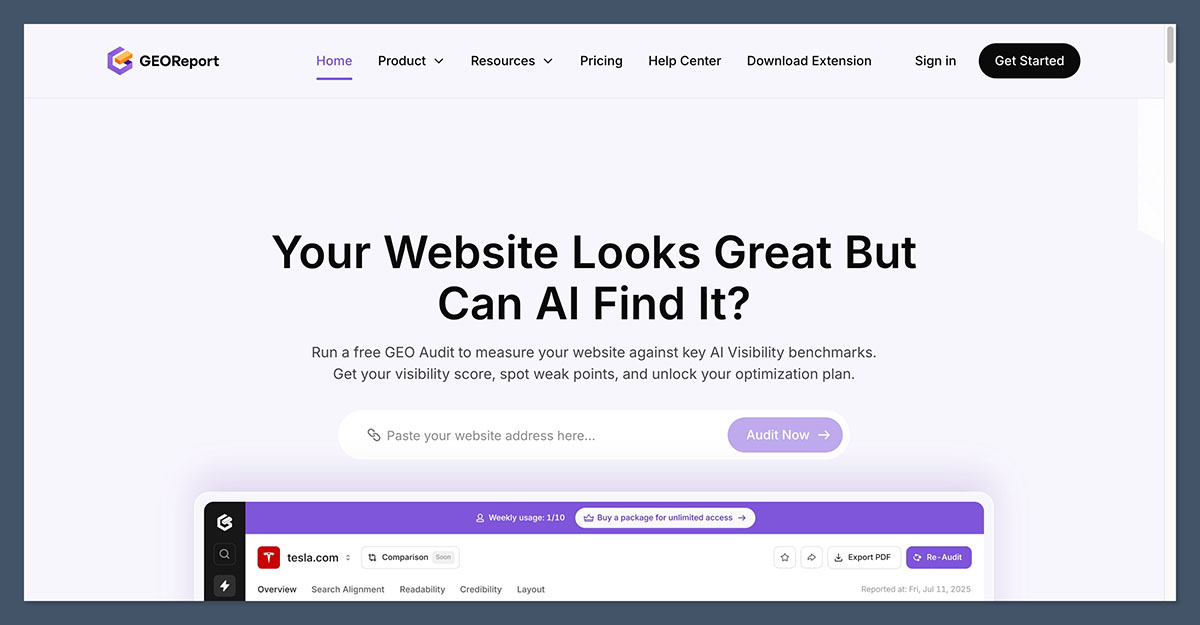
GEOReport.ai is a dedicated generative engine audit platform built specifically for this new category of search.
It queries ChatGPT, Gemini, Claude, and Perplexity on your behalf and scores your brand across four pillars: Search Alignment, Layout, Readability, and Credibility — producing a composite GEO Health Score that’s easy to track over time.
For agencies, the standout features are multi-site support and white-label PDF reporting. You can run page-level and site-level audits, see issues classified by severity, and get concrete fix suggestions — not just a score with no action attached.
Pros:
- The most comprehensive GEO audit framework currently available
- Multi-engine coverage across all four major AI answer platforms
- Actionable issue classification by severity — not just diagnostics
- White-label PDF reports for client delivery
Cons:
- Primarily positioned toward agencies; solo founders may find it more than they need
- Pricing reflects the agency use case
GEOReport.ai is best for: Digital agencies running AEO audits for multiple clients, in-house teams needing a repeatable GEO benchmarking process, and brands that want a structured health score they can track quarter over quarter.
GEOReport.ai is not ideal for: Bootstrapped startups looking for lightweight brand monitoring without the full audit infrastructure.
#2. Gauge — Best for Prompt Monitoring at Scale
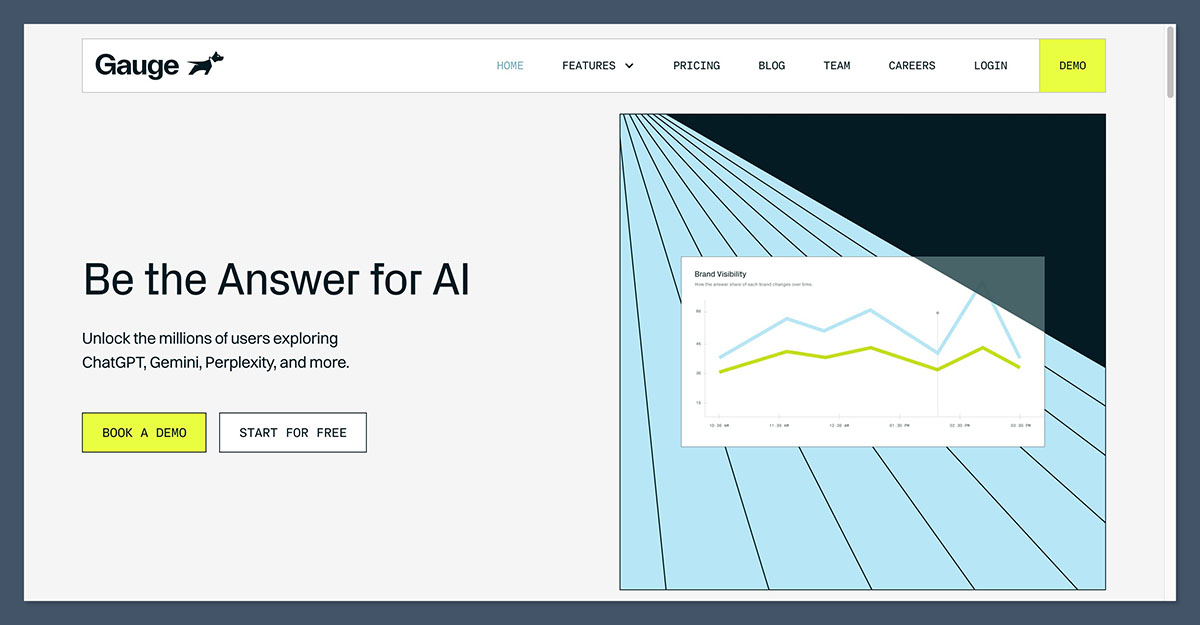
Gauge approaches AEO from the competitive intelligence angle. Rather than running a one-time audit, it tracks thousands of prompts continuously — showing you where your brand appears in AI answers across the queries that matter most to your category.
The platform surfaces which sources AI engines cite most often in your space and which competitors they favor, giving you a gap-and-coverage view that’s genuinely useful for content strategy.
If you want to know why a rival keeps appearing in Perplexity answers while you don’t, Gauge is where you’d start investigating.
Pros:
- Large-scale prompt monitoring — tracks thousands of queries, not just a sample
- Competitive intelligence on which brands and sources AI engines prefer
- Coverage gap analysis to identify where you’re missing from the conversation
Cons:
- More of a monitoring and intelligence tool than a fix-and-audit platform
- Best suited to brands with an established content base to monitor
Gauge is best for: Growth-stage brands and enterprise teams who need ongoing AI visibility monitoring, not just a one-time audit. Particularly strong for competitive research.
Gauge is not ideal for: Early-stage startups with limited content who need to fix foundational issues before monitoring.
#3. Temso — Best for SMBs and Agencies
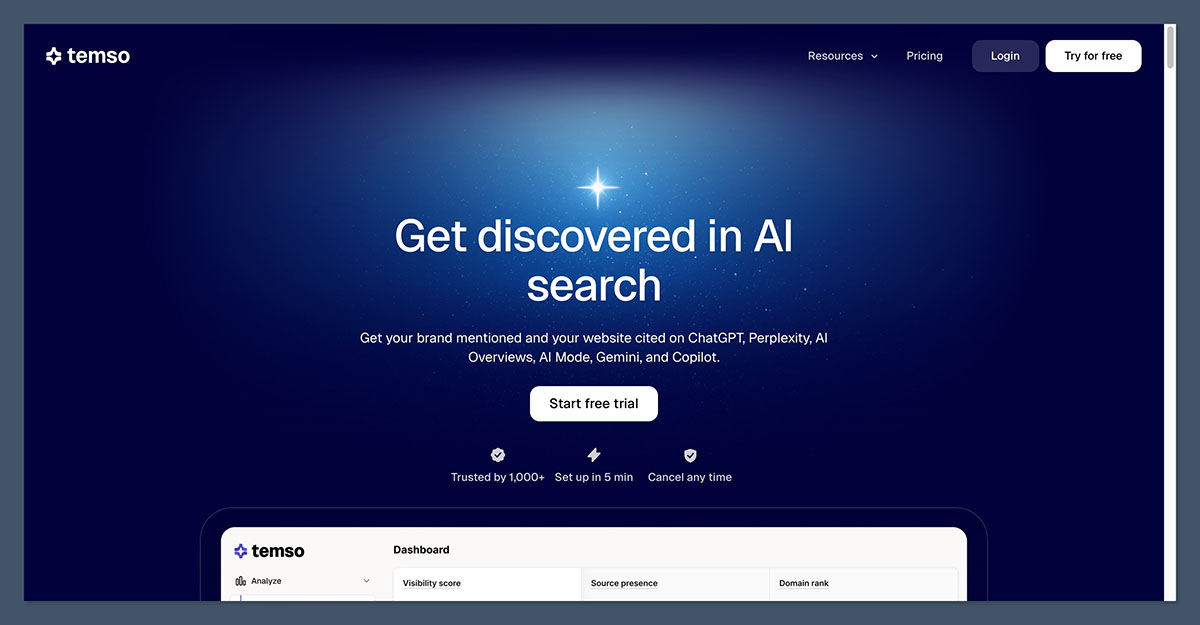
Temso sits between the enterprise complexity of Gauge and the audit depth of GEOReport.ai, making it a well-scoped option for SMBs and boutique agencies.
It offers cross-engine tracking across major LLM models, brand and competitor perception intelligence (what attributes AI engines associate with your brand vs. rivals), share of answers, and customizable prompt groups.
The perception intelligence layer is particularly useful for brand positioning work — understanding not just whether you appear in AI answers, but how you’re described when you do.
Pros:
- Brand perception tracking — attributes, not just presence
- Share of answers metric for competitive benchmarking
- More accessible than enterprise platforms without sacrificing multi-engine coverage
Cons:
- Less depth on fix recommendations compared to GEOReport.ai
- Prompt group customization requires upfront setup investment
Temso is best for: SMBs and agencies wanting brand-level and topic-level AI visibility without enterprise pricing or complexity.
Temso is not ideal for: Teams that need deep technical audit guidance alongside monitoring.
AEO-Friendly SEO Content Tools
These tools don’t query AI engines directly, but their scoring, structure, and editorial workflows are well-aligned with what makes content extractable by AI. They’re the layer that sits between your content team and your AEO audit platform.
Surfer SEO is the most frequently cited option in this category. Its on-page optimizer emphasizes semantic coverage and readability in ways that translate directly into AEO performance. If your content scores well in Surfer, it tends to be structured in a way that AI answer engines find easy to reference.
Frase, Clearscope, InLinks, and SearchAtlas all help you build question clusters, write direct answers, improve entity coverage, and strengthen internal semantic linking. These tools are particularly useful when you want editorial workflows that systematically produce answer-ready pages — useful for content teams shipping at volume.
Featured Snippet and PAA Tools
Winning Google’s Position Zero and People Also Ask boxes remains critical AEO infrastructure — these SERP features feed directly into Google’s own AI Overviews and are heavily referenced by external LLMs as authoritative sources.
#4. Ahrefs — Best for Snippet Research
Ahrefs is the strongest option for reverse-engineering featured snippets. Site Explorer and SERP Overview show you exactly which keywords competitors own snippets for, how those snippet-winning pages are structured, and where your opportunity gaps are.
Keyword Explorer highlights question-based and long-tail terms with snippet potential — the kind of queries that AI engines also prioritize when constructing answers.
Ahrefs is best for: Brands doing systematic snippet research and competitive gap analysis. Essential if featured snippet capture is a core part of your AEO strategy.
#5. Semrush — Best All-in-One Option
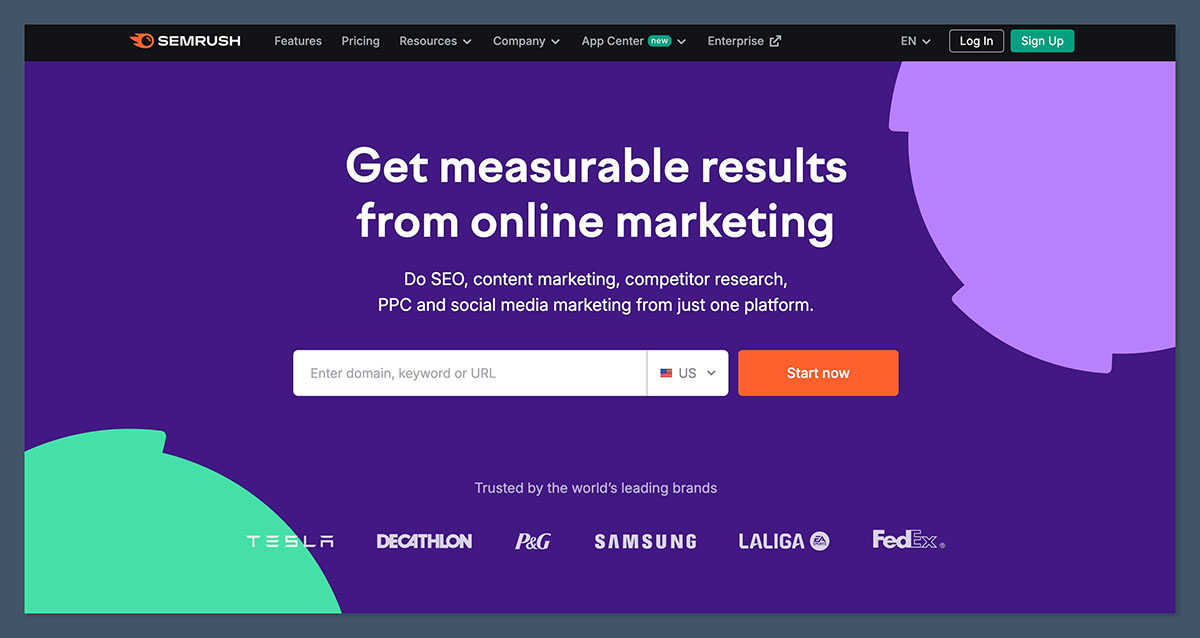
Semrush is increasingly weaving AEO signals into its keyword and SERP reports, with some 2025–26 updates introducing AI Overview-related fields in its SERP data.
It’s not a dedicated GEO tool, but if you’re already embedded in Semrush for your broader SEO workflow, it removes the need for a separate snippet research platform. The tradeoff is that its AI visibility features are still maturing compared to dedicated GEO audit tools.
Semrush is best for: Teams that want one platform for SEO and AEO research, and are already using Semrush for keyword and competitive work.
Schema and Rich Results Validators
Structured data is the most underrated layer of AEO. LLMs lean heavily on schema-marked content when constructing answers — FAQ schema, HowTo, and Product markup give AI engines a direct signal about what your content means, not just what it says.
#6. Google Rich Results Test — Best Free Validator
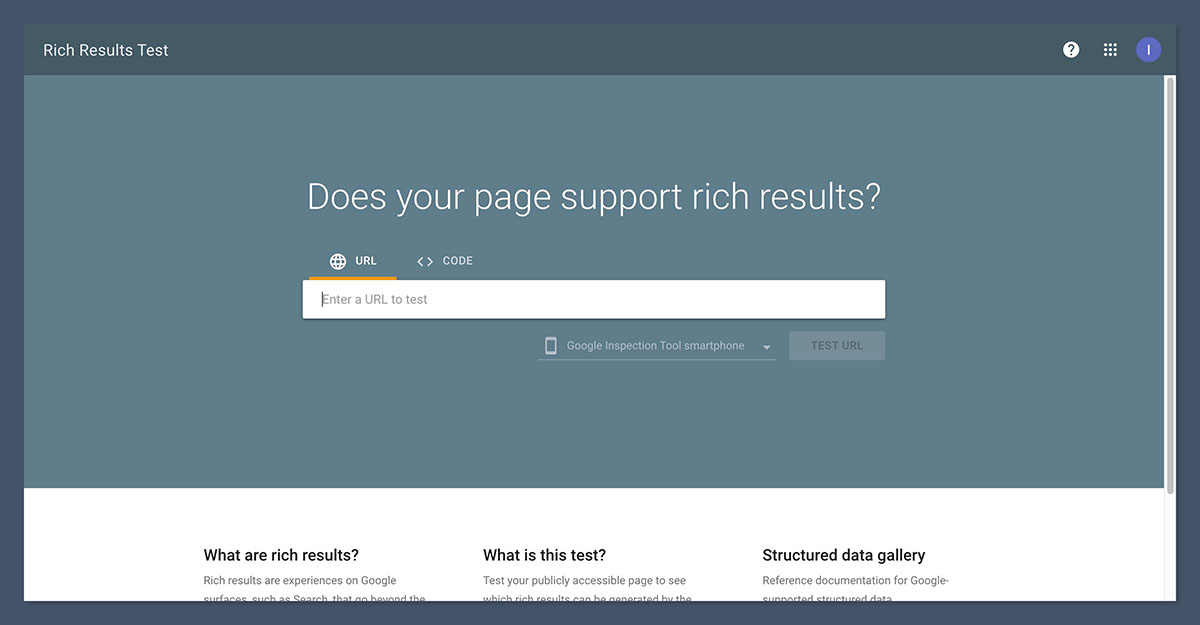
The official Google Rich Results Test shows which rich results your structured data can trigger and previews how they’ll appear in Search.
This is the essential hygiene check for FAQ and HowTo schemas — validating that your markup is both syntactically correct and recognized by Google before you worry about anything else.
It’s free, it’s authoritative, and it should be part of every AEO workflow.
Pair it with a Schema Markup Validator for generic schema.org syntax checking, and start with a focused FAQ set built around real questions your audience asks — quality over quantity.
How to Choose the Right AEO Tool Stack
AEO checking isn’t a single-tool problem. The right stack depends on your stage, budget, and what you’re actually trying to fix. Here’s how to think about it:
What’s your primary goal?
If you need to understand where and how your brand appears in AI answers, start with a GEO audit tool like GEOReport.ai or Temso.
If you’re trying to capture Google’s snippet and PAA features, Ahrefs or Semrush is the right first step. If you’re at the content production layer, Surfer SEO or Frase will improve the raw material before you run any audits.
What’s your team size?
Solo founders and small teams will get more from Temso’s accessible interface and Ahrefs’ well-documented workflows than from enterprise monitoring platforms that require significant setup. Agencies running multiple client accounts will get the most from GEOReport.ai’s multi-site reporting and Gauge’s competitive intelligence depth.
What’s your budget?
The Google Rich Results Test is free and essential — start there regardless of budget. Add Surfer SEO or Frase for content optimization, then layer in a GEO audit platform once your content is structurally solid enough to be audited meaningfully.
Sample AEO Tool Workflows
For Agencies
- Run a GEO audit with GEOReport.ai to establish a baseline health score for each client
- Monitor ongoing AI visibility with Gauge for competitive intelligence across key prompt groups
- Optimize content with Surfer SEO before publishing to maximize answer-readiness
- Validate schema with Google Rich Results Test before any new structured data goes live
For Startup Founders and Solo Creators
- Build answer-ready content with Frase or Clearscope, focused on question clusters in your category
- Research snippet opportunities with Ahrefs Keyword Explorer — target question-based queries with snippet potential
- Validate your FAQ and HowTo schema with Google Rich Results Test
- Add brand monitoring with Temso once you have enough content published to track meaningfully
How We Evaluated These Tools
Our evaluation focused on the criteria that matter most for brands trying to build AI visibility in 2025–26: engine coverage (how many AI platforms a tool monitors), answer granularity (the level of detail in what it measures), actionability of recommendations, competitive and perception intelligence, and reporting quality for client-facing workflows.
We drew on recent tool roundups from GEOReport.ai, Gauge, Temso, Semrush, and independent AEO/GEO evaluators, cross-referenced against hands-on experience advising brands on AI search visibility strategy.
Final Verdict
There’s no single AEO checker that does everything well — and that’s actually fine once you understand the two-layer structure of the category.
GEO audit platforms measure your AI answer presence; SERP and schema tools make sure your content is technically positioned to feed those engines in the first place.
For most brands, the practical starting point is: fix your structured data with the Google Rich Results Test, build answer-ready content with Surfer SEO or Frase, research snippet opportunities with Ahrefs, and then layer in a GEO audit platform — GEOReport.ai if you’re agency-side, Temso if you’re building leaner.
The brands that win in AI-driven search aren’t the ones with the biggest budgets — they’re the ones that understand how AI systems choose, interpret, and reference information. That’s the game, and these tools are how you play it.

